
Many believe the moon’s influence on emotions is mere superstition. The truth is that your sensitive body is a finely tuned instrument registering subtle, real environmental shifts. This guide reframes lunar cycles not as a force that victimizes you, but as a reliable calendar for developing somatic literacy, helping you distinguish gut instinct from trauma and finally process overwhelming feelings with intention.
If you’re a highly sensitive person, the full moon can feel less like a beautiful celestial event and more like an emotional tsunami. It’s that familiar surge of intensity, where feelings are amplified, sleep is disrupted, and the weight of the world seems to settle squarely on your shoulders. You’re told to just “release what no longer serves you” or “set new intentions,” but this advice often feels hollow when you’re caught in the grips of an emotional storm you don’t understand.
The common narrative around lunar cycles is filled with these platitudes. It focuses on rituals like crystal cleansing and intention journaling, which, while valuable, often miss the foundational step: learning to read the language of your own body. What if the overwhelm you feel isn’t a flaw, but a sign of a deeply attuned nervous system? What if your instincts, which get so loud during certain moon phases, are not random anxieties but a form of profound wisdom trying to get your attention?
The key isn’t to brace for impact or ignore these waves, but to learn how to ride them. This guide moves beyond superstition to explore the concept of cyclical alignment. We’ll treat the moon not as a mystical force, but as a predictable pacemaker for your inner world. By developing your somatic literacy, you can begin to differentiate true intuition from a trauma response, understand the messages behind your emotional surges, and use each lunar phase as a dedicated time for specific inner work.
This article provides a structured approach to this practice. We will explore why the full moon feels so overwhelming, how to practice a truly releasing new moon ritual, and the crucial skill of telling instinct from trauma. By the end, you will have a practical framework for aligning your life with your natural emotional rhythm, turning sensitivity from a burden into your greatest strength.
Summary: A Guide to Navigating Your Inner Tides with the Moon
- Why You Feel Emotionally Overwhelmed During a Full Moon?
- How to Practice a New Moon Release Ritual for Emotional Baggage?
- Gut Instinct or Trauma Response: How to Tell the Difference?
- The Danger of Ignoring Your Primal Instincts for Too Long
- How to Align Your Schedule with Your Emotional Highs and Lows?
- When to Discuss Feelings Based on the Lunar Cycle?
- Why Your Gut Feeling Changes When a Partner Cheats?
- Moon Signs Compatibility: The Secret to Emotional Security?
Why You Feel Emotionally Overwhelmed During a Full Moon?
That feeling of being emotionally raw and stretched thin during a full moon isn’t just in your head. It’s rooted in subtle but significant biological and environmental shifts. For sensitives, the veil between the conscious and subconscious thins, bringing everything to the surface. One of the most documented physical effects is on sleep. A study confirms that sleep quality can be disrupted for up to five nights before a full moon, with people sleeping less and reporting lower-quality rest. This sleep deprivation alone is enough to fray the nervous system and amplify emotional responses.
Beyond sleep, the full moon represents a peak of energy. It’s a time of culmination and illumination. For many, this manifests as heightened emotions and a feeling of being flooded. One woman who tracked her cycles documented experiencing “so much emotion, so much sadness, so much grief” during every full moon, regardless of her personal circumstances. She described it as tapping into a “collective sadness.” This isn’t necessarily a negative thing; it’s an opportunity. The intensity is a signal that deep-seated feelings are ready to be seen and processed. It’s a monthly invitation to witness what’s been bubbling under the surface, from personal anxieties to even generational trauma.
Rather than fighting this intensity, the key is to work with it. Acknowledge that you will likely feel more. Plan a lighter schedule, build in extra time for rest, and prioritize grounding practices. This isn’t about avoiding your feelings, but about creating a safe container to experience them without being completely carried away. The overwhelm is a sign that your system is working perfectly, registering the peak energy of the lunar cycle. Your job is to listen and respond with compassion.
How to Practice a New Moon Release Ritual for Emotional Baggage?
While the full moon illuminates what needs to be felt, the new moon offers the sacred darkness required for true release and renewal. This phase isn’t an empty void; it is the fertile soil where new intentions can be planted. A powerful new moon ritual goes beyond simply writing a wish list; it’s about creating space by consciously letting go of emotional baggage. It is a moment of quiet introspection before the next cycle of growth begins.
To create a meaningful ritual, you first need a sacred space. This doesn’t have to be elaborate. It’s about intention. The goal is to create an environment that signals to your nervous system that it’s time for deep, focused inner work. This is the moment to transform abstract feelings into tangible actions of release.

As the scene above suggests, elements like soft candlelight, grounding crystals like black tourmaline, and the scent of sage can help shift your state. The key is to engage the senses to anchor you in the present moment. This is the foundation upon which you can build a practice of intentional release, clearing the way for new growth in the coming waxing phase.
Your New Moon Release Blueprint
- Reflect and Identify: In the quiet darkness of the new moon, spend time journaling. Don’t focus on what you want yet. Instead, write down what no longer serves you—the patterns, fears, or resentments that felt heavy during the last full moon. Be specific.
- Visualize Release: As you reflect on these items, visualize yourself navigating future challenges without this baggage. See yourself responding with calm and clarity instead of reacting from old wounds. This is about reprogramming your emotional response.
- Perform a Ceremonial Discard: Write the things you are releasing on a separate piece of paper. Find a ceremonial way to let them go. This could be safely burning the paper and watching the smoke carry the intention away, or tearing it into small pieces and burying it in the earth to be composted.
- Plant the New Seed: Only after creating this space, turn your focus to what you wish to achieve. Journal about one or two key intentions for the upcoming cycle. Keep it focused. Visualize your aspirations coming to fruition as the moon waxes.
- Acknowledge Progress: During the following waxing moon phase, take small, intentional steps toward your goals and make a point to acknowledge your progress, no matter how minor it seems. This builds momentum and reinforces the new pattern.
Gut Instinct or Trauma Response: How to Tell the Difference?
For a highly sensitive person, the constant influx of emotional and energetic data can be confusing. Is that knot in your stomach a true intuitive warning, or is it the echo of a past trauma? This distinction is the cornerstone of developing somatic literacy. The moon’s phases can be a powerful tool for this, as they often amplify both signals. As one expert in empathic therapy notes, your body is always trying to communicate:
Your sensitive nervous system is constantly scanning for safety and information. Lunar phases create subtle but real shifts in atmospheric pressure, light levels, and electromagnetic fields that your system registers and responds accordingly.
– Enodia Therapies, The Empath’s Guide to Lunar Cycles
Understanding this helps you see these feelings not as random noise, but as data. A trauma response is a historical echo; it’s your body trying to protect you from a danger that *was* real. A gut instinct, or primal intuition, is a present-moment signal about what is happening *now*. The volatile energy of a full moon can trigger trauma responses, making them feel urgent and panicky. Conversely, the grounded, quiet energy of a new moon, especially in an earth sign, can provide the clarity needed to hear the calm, knowing voice of your intuition. Learning to differentiate them is a practice of self-attunement.
This comparative guide from an analysis by Enodia Therapies offers clear distinctions to help you decode your body’s signals. Paying attention to these nuances, especially in relation to the lunar cycle, is how you begin to trust yourself again.
| Characteristic | Gut Instinct | Trauma Response |
|---|---|---|
| Physical Sensation | Expansive, centered in gut/heart | Constrictive, scattered (throat, jaw tension) |
| Lunar Timing | Clear during grounded New Moon in earth signs | Heightened during volatile Full Moon |
| Emotional Quality | Calm knowing with sense of choice | Urgent panic with powerlessness |
| Pattern Recognition | Specific to present moment | Echo of past experiences |
| Decision Impact | Provides information and options | Feels like a command or ultimatum |
The Danger of Ignoring Your Primal Instincts for Too Long
Your primal instincts are a biological inheritance, a survival mechanism designed to keep you safe. In modern society, we are often taught to suppress this non-verbal wisdom in favor of logic and social appropriateness. For a sensitive person, this suppression is not just a mental exercise; it’s a profound disservice to the body’s intelligence. Ignoring these deep intuitive hits, especially when they are amplified by lunar cycles, can lead to a state of chronic dissonance. This inner conflict can manifest as anxiety, depression, and even physical illness.
When you repeatedly override your gut feelings, your body doesn’t just go quiet. It often turns up the volume. What starts as a subtle feeling of unease can escalate into panic attacks, chronic fatigue, or autoimmune issues. This is your nervous system screaming for attention. In extreme cases, this disconnection from natural rhythms can have severe consequences. For example, groundbreaking research on 17 patients with bipolar disorder revealed their rapid mood cycles weren’t random but synchronized with the lunar cycle, likely due to disruptions in their internal body clock (circadian rhythm).
Furthermore, these instincts are often connected to more than just personal experience. Sometimes, the heavy emotional load you feel, particularly during a full moon, is related to generational trauma. You might be the first person in your family line to have the awareness to process this inherited energy. While this is a “big job,” as one practitioner notes, ignoring it only allows the baggage to accumulate. Using the potent energy of the full moon for this work is not about dwelling in sadness, but about liberating yourself and future generations from old patterns. Ignoring your primal instincts is ignoring a call to healing, one that will only get louder until it is heard.
How to Align Your Schedule with Your Emotional Highs and Lows?
Once you start tracking your emotional patterns alongside the moon, you’ll discover a predictable rhythm to your energy. This is invaluable data. Instead of fighting against your natural ebbs and flows, you can begin a practice of cyclical alignment—structuring your life, work, and social commitments to honor your innate energy levels. This is a radical act of self-care that moves you from a state of constantly reacting to one of intentional living. Experts recommend tracking your mood and energy daily for at least two to three full lunar cycles (about two to three months) to identify your unique personal patterns.
A simple way to begin is by dividing your activities into four categories corresponding to the moon’s main phases:
- New Moon: This is a time of low energy and inward focus. Use it for planning, brainstorming, and sketching out new ideas. Avoid major launches or high-pressure meetings.
- Waxing Moon: As the moon’s light grows, so does your energy. This is the time for action, growth, and pushing projects forward. Schedule important meetings and tackle challenging tasks.
- Full Moon: Your energy is at its peak. This is great for seeing projects come to fruition, networking, and celebrating achievements. However, be mindful that emotional sensitivity is also at its highest, so avoid conflict and allow for extra decompression time.
- Waning Moon: As the light recedes, your energy naturally turns inward again. This is the perfect time for reflection, editing, organizing, and letting go of what’s complete. Focus on wrapping up projects rather than starting new ones.
This isn’t about rigid rules, but about creating a supportive structure. Your desk planner might start to look different, with more white space around the full moon and more action items during the waxing phase.
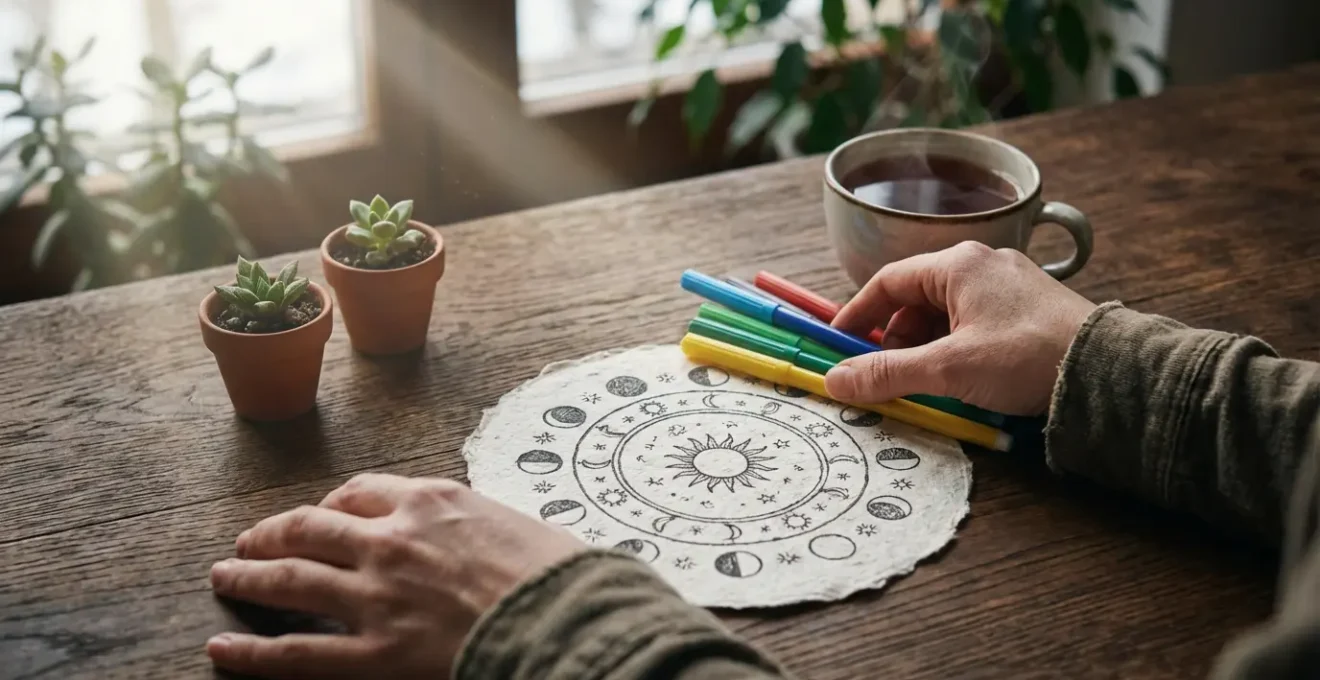
By aligning your schedule with the moon, you’re not trying to control your emotions. You are honoring them. You’re creating a lifestyle that supports your sensitive nervous system instead of constantly challenging it. This simple shift can dramatically reduce feelings of overwhelm and burnout, allowing your creativity and productivity to flourish in a sustainable way.
When to Discuss Feelings Based on the Lunar Cycle?
Just as you can align your work schedule with the moon, you can also time important conversations to harness the available energy. For sensitive people, expressing feelings or navigating conflict can be daunting. Using the lunar cycle as a guide can provide a supportive energetic container for these discussions, increasing the chances of a positive outcome. Each phase offers a different flavor of energy, making it better suited for certain types of communication.
As Dr. Carrie Pitzulo, an expert in ancient practices, explains, the full moon’s intensity “can make us feel anxious, manic, and emotional.” Knowing this, you might choose to avoid initiating a difficult conversation during this peak, or if you do, to approach it with extra care and awareness. The key is to be intentional. You wouldn’t plant a seed in frozen ground; likewise, you shouldn’t try to start a delicate conversation in hostile energy. This is about choosing the right “emotional weather” for what you want to achieve.
This communication matrix, based on insights from a Bustle article on lunar moods, provides a helpful framework. It helps you match the type of conversation to the moon phase that best supports its intention, whether it’s setting boundaries or sharing deep feelings.
| Conversation Type | Best Moon Phase | Energy Available |
|---|---|---|
| Expressing new feelings | Waxing Crescent | Forward-moving energy with sense of renewal and possibility |
| Resolving conflicts | Third Quarter | Tension supports conclusive action |
| Deep emotional sharing | Full Moon | Energetic high point for bringing things to climax or release |
| Setting boundaries | Waning Moon | Natural time for letting go and pruning commitments |
| Planning together | New Moon | Cosmic energy naturally supportive of starting new things |
Why Your Gut Feeling Changes When a Partner Cheats?
Betrayal, especially from a partner, is a deeply disorienting experience. For many sensitive people, the first sign of trouble isn’t concrete evidence but a subtle, sickening shift in their gut feeling. This intuitive hit is often an experience of energetic severance. The energetic cord that connects two people in an intimate relationship becomes frayed or broken, and a highly attuned nervous system registers this change immediately. It can feel like a sudden coldness, a sense of distance, or an inexplicable feeling that something is “off,” even when everything on the surface appears normal.
The full moon often acts as an amplifier for this painful awareness. During this phase, when emotions are already heightened, the subconscious mind brings this unsettling information to the forefront. It becomes a time of “intense feelings, and deep reflection,” where you are prompted to let go of what no longer serves you—including relationships built on deceit. The intuitive knowing that was a quiet hum can become a deafening roar, impossible to ignore. The challenge, however, is to differentiate this true gut instinct from general anxiety or insecurity that might also be magnified by the full moon’s energy.
To gain clarity, ask yourself differentiating questions:
- Is this feeling tied to a specific action or inconsistency, or is it a free-floating fear?
- Does the feeling persist even when my partner is being reassuring and things seem perfect?
- Is the full moon’s energy simply intensifying my existing anxieties, or is it illuminating a genuine intuitive red flag?
This process of self-inquiry helps you parse the signals. An insecurity often seeks reassurance and can be temporarily soothed. A true gut feeling about betrayal remains unchanged by surface-level actions; it’s a deep, calm, and persistent knowing that a fundamental truth has shifted in the relationship.
Key takeaways
- The full moon amplifies emotions by disrupting sleep and bringing subconscious feelings to the surface, offering an opportunity for processing, not a reason for panic.
- True release happens during the new moon’s fertile darkness, where you can consciously let go of emotional baggage to create space for new intentions.
- Distinguishing gut instinct (calm, present-moment knowing) from a trauma response (panicked, historical echo) is the most critical skill for a highly sensitive person.
Moon Signs Compatibility: The Secret to Emotional Security?
As you deepen your understanding of your own emotional cycles, you may become curious about how these energies interact within your relationships. This is where the concept of moon signs comes into play. While your sun sign represents your core identity, your moon sign governs your inner emotional world: your needs, your reactions, and what makes you feel safe and secure. Understanding your own moon sign and that of your partner can be a revolutionary tool for building emotional intimacy.
Compatibility between moon signs isn’t about finding a perfect match, but about understanding each other’s emotional language. For example, someone with a Cancer moon, which is ruled by the moon itself, will experience everything about the lunar cycle more intensely. They are intuitive and passionate, and a full moon can bring “a lot of tears because it all gets a bit overwhelming.” A partner who understands this can offer space and compassion instead of judgment. In contrast, a partner with a moon in an air sign like Aquarius might process emotions more intellectually and need space to think things through.
Knowing these differences prevents misunderstanding. A Scorpio moon, already a “10” in emotional intensity, will feel the full moon’s amplification profoundly. A partner who knows this can anticipate the need for deep connection or a safe space for emotional release. It’s not about using astrology as an excuse for behavior, but as a map to each other’s inner landscapes. This knowledge fosters empathy and provides a shared language to discuss emotional needs, creating a foundation of genuine security that goes far beyond surface-level compatibility.
By learning to read your body’s signals and align with the moon’s predictable rhythm, you transform your sensitivity from a source of overwhelm into a source of profound wisdom. The next step is to begin this practice for yourself, starting with simple, compassionate observation.