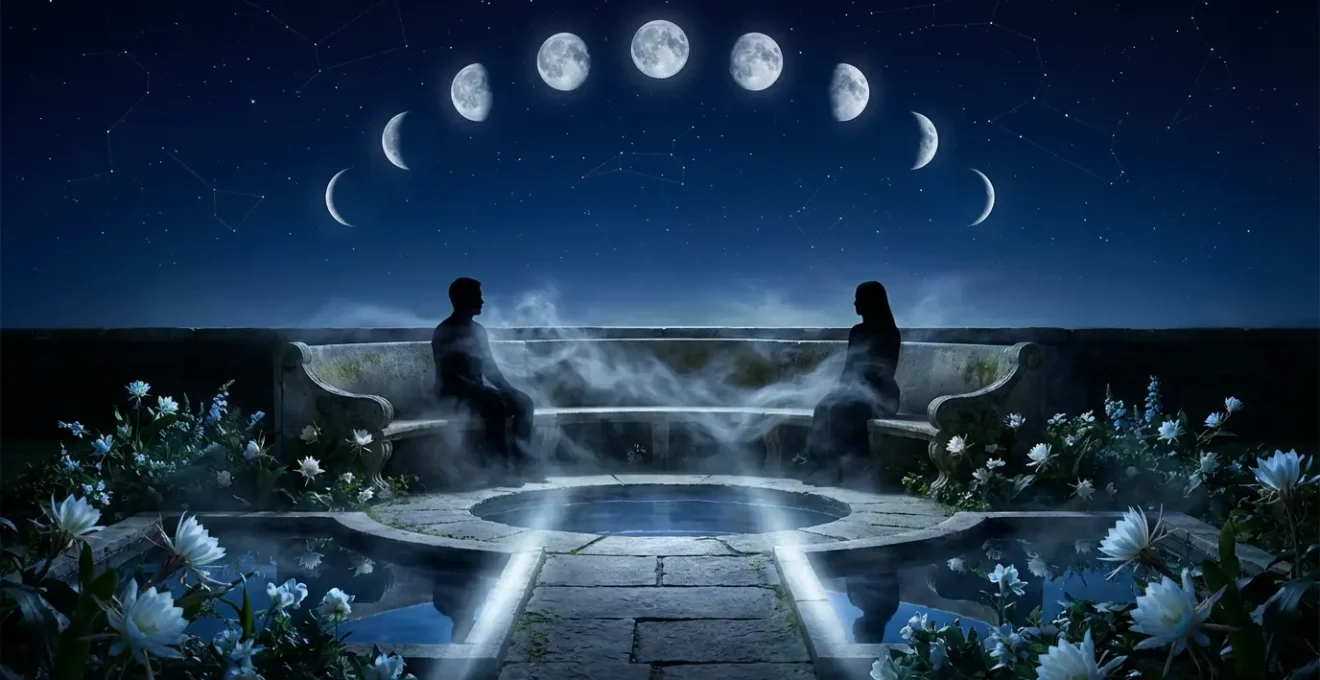
Many couples seek answers in Sun sign compatibility, only to remain emotionally disconnected. The truth is that lasting intimacy isn’t about shared personalities, but about understanding our deepest security needs. This article reveals that your Moon sign is your “emotional operating system,” the key to decoding your own needs for safety and learning the unique security language your partner speaks, transforming conflict into profound connection.
Have you ever felt a strange and silent distance in your relationship, a sense that despite the love, your emotional needs are misunderstood or simply unmet? You talk, you try to explain, but it feels like you’re speaking a different language. This experience is the quiet heartbreak of countless couples who are deeply in love but emotionally out of sync. For decades, popular astrology has pointed us toward Sun signs, suggesting that a Leo and a Sagittarius should be a perfect match. Yet, this often only scratches the surface, leaving us confused when a “perfect” pairing feels so challenging.
The common advice is to “communicate more,” but this advice fails when the very channels of communication are misaligned. The real issue isn’t a lack of effort; it’s a lack of understanding of our fundamental emotional wiring. But what if the key to unlocking this profound connection wasn’t in your personality, but in your soul’s most tender, private needs? What if the secret to feeling truly seen, heard, and safe in love lies in the gentle glow of the Moon in your birth chart?
This is where we move beyond the surface and into the heart of the matter. Your Moon sign is the sacred blueprint of your inner world. It governs not what you think, but what you *feel*. It is the legacy of your first bond, your relationship with the maternal, and the very foundation of what makes you feel secure. Understanding this lunar blueprint is the first step toward emotional self-sovereignty and, in turn, the ability to create a truly nurturing partnership. This guide will walk you through the essential layers of lunar wisdom, from its origins to its practical application in your daily life and love.
To navigate this inner cosmos, we will explore the foundations of your emotional nature and how to harmonize it with your partner’s. This journey will provide you with the insights and tools needed to build a relationship based on deep, empathetic understanding.
Summary: Moon Signs Compatibility: The Secret to Emotional Security?
- Why Your Moon Sign Reveals Your Relationship with Your Mother?
- How to Self-Soothe Based on Your Specific Moon Sign?
- Feeling or Discussing: Which Moon Style Needs What?
- The Mistake of Expecting Your Partner to Guess Your Moon Needs
- When to Discuss Feelings Based on the Lunar Cycle?
- Moon Needs vs Venus Wants: Which Should You Prioritize in Love?
- Why You Feel Emotionally Overwhelmed During a Full Moon?
- Processing Deep Emotions and Instincts Using Lunar Cycles
Why Your Moon Sign Reveals Your Relationship with Your Mother?
Before we can understand our needs in partnership, we must travel back to the source of our emotional patterning: our first relationship. In the language of astrology, the Moon is the universal symbol for the mother, the womb, and the primary source of nurturing we received. Your Moon sign, therefore, is not just a description of your emotions; it is a living map of your maternal imprint. It describes how you perceived your mother and, more importantly, the specific “flavor” of care that you learned to equate with safety and love. This early conditioning becomes the subconscious foundation for what you seek from a partner to feel emotionally secure.
This connection is profound and shapes our relational instincts in ways we rarely comprehend. As the experts at Llewellyn Unbound explain, the Moon sign is a direct reflection of this foundational bond. In their insightful article on the topic, they note:
In astrology, the moon sign shows how we perceive our mother. It can show what the relationship was like and how we received nurturing
– Llewellyn Unbound, How Our Moon Sign Reveals Our Mother’s Personality Traits
An Aries Moon may have perceived their mother as a dynamic, independent but perhaps impatient figure, learning that love is active and needs freedom. A Cancer Moon, by contrast, likely experienced nurturing as deeply protective and emotionally present, learning that love means safety and belonging. Recognizing this pattern is not about blame; it is about compassionate awareness. It allows you to see the blueprint of your needs with clarity. To begin untangling these inherited patterns, you can start by reflecting on your Moon’s element:
- Fire Moons (Aries, Leo, Sagittarius): Journal about times your need for independence clashed with emotional needs. Ask: “Where did I learn to equate vulnerability with weakness?”
- Earth Moons (Taurus, Virgo, Capricorn): Explore your relationship with material security. Ask: “How does my need for stability sometimes prevent emotional growth?”
- Air Moons (Gemini, Libra, Aquarius): Examine your tendency to intellectualize feelings. Reflect on: “When did I first learn to disconnect from emotions through analysis?”
- Water Moons (Cancer, Scorpio, Pisces): Investigate emotional absorption. Consider: “How do I distinguish between my emotions and those I inherited from my maternal line?”
How to Self-Soothe Based on Your Specific Moon Sign?
Once you understand where your emotional needs come from, the next step toward a healthy partnership is developing emotional self-sovereignty. This is the gentle art of learning to give yourself the specific type of comfort your inner self craves, rather than solely depending on a partner to provide it. Each Moon sign has a unique “reset button”—a specific way of returning to a state of peace and security. Learning to press this button for yourself is a radical act of self-love that transforms a relationship from one of dependent seeking to one of shared fullness.
The key is to move from unconscious, often unhealthy, comfort-seeking behaviors (the shadow) to conscious, healthy self-nurturing practices (the light). For example, a Taurus Moon’s need for sensory pleasure can manifest as overindulgence (shadow) or as a mindful, grounding experience like enjoying a luxurious bath (light). A Gemini Moon’s need for mental processing can lead to anxious gossip (shadow) or constructive journaling (light). The process is about upgrading your coping mechanisms to align with your highest good.
This table illustrates how to shift from the shadow expression of your Moon’s needs to a healthier, more empowering form of self-care. Finding your sign can be a moment of profound recognition, offering a clear path to self-soothing.
| Moon Sign | Shadow Comfort | Healthy Upgrade |
|---|---|---|
| Aries | Aggressive confrontation | Physical exercise & healthy competition |
| Taurus | Overindulgence in comfort | Mindful sensory experiences |
| Gemini | Gossip & mental loops | Journaling & constructive dialogue |
| Cancer | Emotional withdrawal | Nurturing self-care rituals |
| Leo | Attention-seeking drama | Creative self-expression |
| Virgo | Obsessive criticism | Constructive problem-solving |
| Libra | People-pleasing | Balanced self-advocacy |
| Scorpio | Obsessive control | Transformative shadow work |
| Sagittarius | Escapism through excess | Meaningful adventure & learning |
| Capricorn | Workaholism | Structured self-care |
| Aquarius | Emotional detachment | Community connection |
| Pisces | Fantasy & avoidance | Creative visualization & meditation |
By consciously choosing the “Healthy Upgrade,” you begin to fill your own cup. This not only makes you feel more centered and secure but also relieves your partner of the impossible burden of being your sole source of comfort, creating space for a more balanced and generous love.
Feeling or Discussing: Which Moon Style Needs What?
Here lies one of the most common sources of friction in relationships: the fundamental difference in how we process emotions. We often assume our partner experiences feelings in the same way we do, leading to deep misunderstandings. The elemental nature of your Moon sign—Fire, Earth, Air, or Water—reveals your primary emotional processing style. Not understanding this is like a person who needs to talk it out (Air) trying to connect with a person who needs to feel it out (Water); they are speaking entirely different security languages.
The core distinction is between experiential and cognitive processing. Fire and Water Moons need to *experience* their emotions. Fire Moons (Aries, Leo, Sagittarius) need to act, move, and express their feelings outwardly. Water Moons (Cancer, Scorpio, Pisces) need to immerse themselves in their feelings, letting the emotional waves wash over them. For them, emotion is an embodied, non-verbal reality. In contrast, Air and Earth Moons need to *analyze* their emotions. Air Moons (Gemini, Libra, Aquarius) need to talk, intellectualize, and understand their feelings logically. Earth Moons (Taurus, Virgo, Capricorn) need to ground their feelings in practical, tangible reality. For them, an emotion is a problem to be solved or a situation to be managed. Astrological research highlights this divide, showing that Fire/Water Moons are 73% more likely to need experiential processing, while their Air/Earth counterparts show a strong preference for cognitive analysis.
To bridge this gap, we must become translators. Instead of demanding that our partner adopt our style, we can learn to ask for what we need in their language. This illustration offers a visual metaphor for these four distinct inner worlds.

Seeing these styles as different but equally valid is the key. A Water Moon isn’t being “overly emotional”; they are processing. An Air Moon isn’t “cold and detached”; they are processing. The path to connection is through compassionate translation. For example, an Air Moon can say to a Water Moon, “I hear that you’re feeling overwhelmed. Can you help me understand what this emotion feels like in your body?” This simple script honors both needs: the Air Moon’s need for understanding and the Water Moon’s need for somatic acknowledgment. True compatibility is not about having the same style, but about respecting the differences.
The Mistake of Expecting Your Partner to Guess Your Moon Needs
The most romanticized and yet most damaging myth in relationships is the idea of a partner who intuitively knows what we need without us having to ask. We see it in movies, we read it in books, and we internalize the belief that if someone *truly* loves us, they will be able to read our minds and hearts. In astrology, this translates to the dangerous assumption that a “compatible” Moon sign pairing means your partner will automatically understand your deepest emotional needs. This expectation is a recipe for resentment and disappointment.
No matter how compatible your charts are, your partner cannot live inside your inner world. Your Moon sign represents a lifetime of unique experiences, conditioning, and subtle emotional triggers. A Leo Moon’s need for appreciation is not a simple desire for compliments; it’s a deep need to feel seen and celebrated for their unique essence. A Scorpio Moon’s need for intimacy is not just about physical closeness; it’s a profound need for soul-baring vulnerability and absolute trust. Expecting someone to guess the precise nuances of these needs is not only unfair, it’s a form of emotional abdication.
The most loving and empowering action you can take in a relationship is to create your own “emotional user manual” and share it with your partner. This means taking responsibility for understanding your own needs and then articulating them in a clear, non-accusatory way. It’s about shifting from a toxic demand (“You never make me feel special!”) to a loving invitation (“I feel most loved when you celebrate my achievements with me.”). This conscious communication is what builds true, unshakable security. The AstroTwins, leading voices in modern astrology, emphasize that while Moon signs are crucial for compatibility, this connection is not automatic; it must be consciously cultivated.
Your responsibility is to know yourself first. A Virgo Moon who understands their need for order can say, “Having a plan helps me feel secure in our relationship,” instead of criticizing a partner’s spontaneity. An Aquarius Moon, aware of their need for freedom, can communicate, “Time apart helps me appreciate our connection even more,” preventing their partner from feeling abandoned. This practice transforms neediness into a powerful act of connection and co-creation.
When to Discuss Feelings Based on the Lunar Cycle?
In the delicate dance of emotional communication, timing is everything. You can have the most self-aware insights and the most lovingly crafted “I statements,” but if you try to share them at the wrong moment, they can fall on deaf ears or even ignite conflict. The ancient wisdom of astrology teaches us that just as the Moon governs the tides of the ocean, it also governs the tides of our emotional receptivity. Aligning your important conversations with the lunar cycle is a simple yet profoundly effective way to ensure you are being heard.
Certain moments in the lunar cycle are simply not conducive to clear communication. The most notorious of these is the Void-of-Course Moon, a period when the Moon is transitioning between signs and is said to be “resting.” During this time, which can last from a few minutes to a full day, conversations tend to be fruitless, decisions are often revised later, and misunderstandings are common. In fact, some astrological timing research indicates that communications during Void-of-Course Moon periods show a 40% higher rate of misunderstanding. Attempting a heartfelt discussion during this window is like planting a seed in barren soil.
Conversely, other phases are ripe with potential. The Waxing Crescent is a time for sharing hopes, while the First Quarter Moon provides the dynamic energy needed to tackle constructive conflicts. The Waning Gibbous phase is perfect for sharing wisdom and insights gleaned from recent experiences. Learning to work with this natural rhythm, instead of against it, is a game-changer. It’s about choosing the path of least resistance and allowing the cosmic flow to support your connection. Before initiating a significant emotional conversation, it’s wise to perform a quick audit of the current timing and your shared emotional landscape.
Action plan: Auditing your emotional conversation timing
- Points of contact: Identify where the emotional disconnect occurs. Is it during planning (Earth), spontaneous moments (Fire), deep talks (Water), or daily logistics (Air)?
- Collecte: Inventory your recent communication attempts. What was the lunar phase? Was it a high-tension time like a Full Moon or a low-energy time like a Balsamic Moon?
- Cohérence: Confront your communication style with the Moon’s energy. Are you trying to initiate (New Moon energy) a conversation about letting go (Waning Moon energy)?
- Mémorabilité/émotion: Assess the emotional atmosphere. Does the current lunar phase support calm discussion (Waxing Moon) or is it pushing for emotional release (Full Moon)?
- Plan d’intégration: Choose a specific upcoming lunar phase for your next important talk. For example, schedule a “dream-sharing” session during the Waxing Crescent or a “gratitude talk” on the Full Moon.
By treating the lunar cycle as your guide, you move from reactive communication to strategic, sacred dialogue. This simple shift in timing can transform frustrating cycles of miscommunication into moments of genuine breakthrough and intimacy.
Moon Needs vs Venus Wants: Which Should You Prioritize in Love?
In the quest for love, it’s easy to get confused between two powerful celestial energies: the Moon and Venus. Venus governs what you *want* in a relationship—attraction, pleasure, romance, and the aesthetic of love. It’s the spark, the chemistry, the shared enjoyment of life’s beauties. The Moon, however, governs what you fundamentally *need*—emotional security, comfort, and a sense of home and belonging. While Venus is the beautiful decoration on the house of a relationship, the Moon is its very foundation. A relationship built only on Venusian wants without a solid lunar foundation is destined to feel unstable and insecure.
This is a crucial distinction that many people miss. As The AstroTwins state in their mindbodygreen guide, a focus on Sun sign compatibility is often misplaced. The real key to lasting connection lies deeper:
Your moon rules your emotions, your responses, even what you’re drawn to sometimes. It’s your internal life, and Moon signs are kind of everything for compatibility. While everyone jumps to check if their sun sign is compatible with their lover’s, you might actually be better off checking your moon signs.
– The AstroTwins, Moon Sign Compatibility Guide – mindbodygreen
Imagine your relationship as a home. Venus is the choice of art on the walls, the color of the paint, the style of the furniture, and the music playing in the background. These things create pleasure and beauty. The Moon, however, is the solid foundation, the sturdy walls, and the protective roof that keeps you safe from the storm. You can live in a beautifully decorated house, but if the foundation is cracked, you will never truly feel at rest. In the same way, you can have a partner who shares all your tastes (Venus), but if they cannot meet your core need for security (Moon), you will never feel truly home with them.
This visual metaphor helps clarify the different roles these planets play. Venus brings joy, but the Moon brings peace. Both are important, but one is essential for survival.
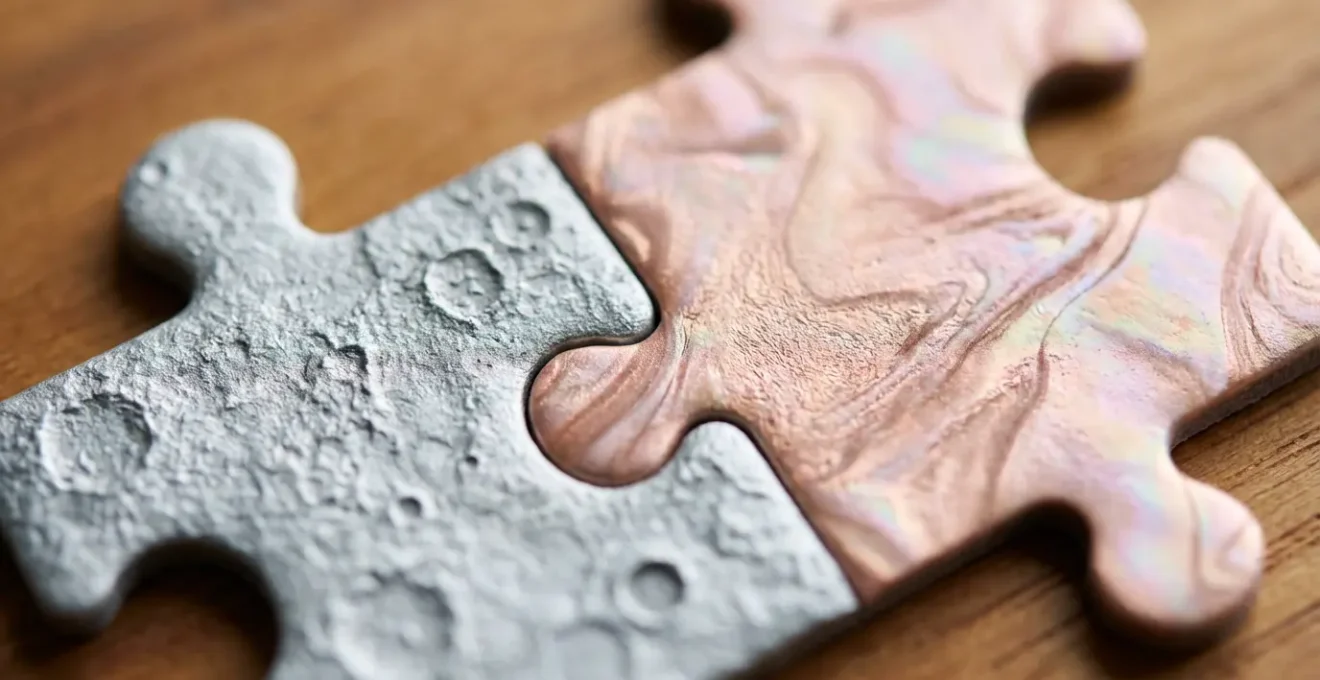
Therefore, when building a lasting partnership, the priority must always be on the Moon. Are your foundational security needs being met? Do you feel safe, seen, and nurtured? Once that lunar foundation is solid, the Venusian pleasures can be built upon it, creating a relationship that is not only secure but also beautiful and joyful. Prioritizing Venus over the Moon is like choosing drapes before building walls—an approach that leaves you exposed and vulnerable.
Why You Feel Emotionally Overwhelmed During a Full Moon?
The Full Moon is a time of culmination, illumination, and often, intense emotional overwhelm. It’s a common experience to feel more sensitive, reactive, or simply “full” of feelings during this lunar phase. This isn’t just folklore; it’s a key astrological event. During a Full Moon, the Sun and Moon are in direct opposition in the sky. The Sun, representing our conscious ego and external life, shines its full light onto the Moon, representing our subconscious, our inner world, and our hidden emotions. This intense illumination leaves nothing in the shadows. Everything we’ve been feeling, but perhaps not acknowledging, is brought to the surface.
This powerful opposition creates a cosmic tension that we feel in our own lives. Astrological observations confirm that the Full Moon creates a Sun-Moon opposition affecting emotional awareness in 100% of individuals, making it a universal experience of heightened sensitivity. It pulls our private feelings into public consciousness, forcing us to look at what’s really going on inside. This is why small irritations can suddenly feel like major crises, and why we might find ourselves weeping without fully understanding why. Your emotional cup is simply overflowing.
For a more personalized understanding, the power of a Full Moon is magnified in the specific areas of your life (or “houses”) it activates in your birth chart. As explained on Cafe Astrology, this activation brings specific themes to a peak. For example, a Full Moon activating your 4th house of home and 10th house of career can bring a sudden crisis or awareness around your work-life balance. You may feel torn between family obligations and professional demands. If it activates the 1st house of self and 7th house of partnership, relationship dynamics are brought into the spotlight. Hidden imbalances between your personal needs and your partner’s expectations can become glaringly obvious, demanding attention and resolution.
Instead of fearing this intensity, we can learn to work with it. The Full Moon is not here to torment us; it is here to reveal. It’s a sacred opportunity for release and a monthly emotional cleanse. It asks us: “What are you ready to let go of? What truth is now illuminated?” By understanding the mechanics behind the overwhelm, you can shift from being a victim of the lunar tides to being a conscious participant in their cleansing power.
Key takeaways
- Your Moon sign is your emotional blueprint, shaped by your relationship with your mother and dictating your core security needs.
- True compatibility comes from learning to translate your partner’s unique “security language,” not from having the same needs.
- Prioritize foundational Moon needs (security, comfort) over superficial Venus wants (attraction, pleasure) for a lasting bond.
Processing Deep Emotions and Instincts Using Lunar Cycles
Understanding your Moon sign is just the beginning. To truly master your emotional world, you can learn to work with the entire lunar cycle as a dynamic tool for processing, releasing, and integrating your deepest feelings. The Moon is not a static point; it is a constantly moving guide, offering different energies and opportunities at each phase. By aligning your inner work with this natural rhythm, you create a sustainable practice for lifelong emotional growth, both individually and within your partnership.
Beyond the sign, the natal lunar phase—the phase the Moon was in when you were born—adds another rich layer to your emotional blueprint. It describes your fundamental approach to life and how you instinctively process emotions. For example, a person born on a New Moon is an emotional pioneer, quick to initiate and respond instinctively. Someone born under a Full Moon is here to bring things to awareness and integrate opposing forces. Knowing your natal phase provides a roadmap for your soul’s emotional journey.
This framework gives you a deeper understanding of your inherent emotional style, moving beyond just the “what” (your sign) to the “how” (your phase).
| Birth Lunar Phase | Core Approach | Emotional Processing Style |
|---|---|---|
| New Moon | Initiating & pioneering | Instinctive, spontaneous emotional responses |
| Crescent | Struggling & emerging | Breaking from past emotional patterns |
| First Quarter | Crisis & action | Decisive emotional breakthroughs |
| Gibbous | Perfecting & analyzing | Refining emotional understanding |
| Full Moon | Fulfillment & awareness | Conscious emotional integration |
| Disseminating | Sharing & teaching | Communicating emotional wisdom |
| Last Quarter | Re-orienting & releasing | Letting go of outdated emotions |
| Balsamic | Surrendering & transitioning | Spiritual emotional transformation |
For an even more advanced practice, you can track your Progressed Moon. This astrological technique shows how your emotional focus shifts over time, as your Progressed Moon changes signs roughly every 2.5 years. Paying attention to its sign and house placement can reveal the evolving themes in your emotional life, helping you adapt your self-care practices to meet your current needs. It is a powerful way to stay in tune with your own inner seasons. This ongoing dialogue with the Moon, in all its forms, is the ultimate practice of emotional intelligence.
Begin this journey of lunar self-discovery today. The first step is to identify your own Moon sign and begin observing its needs with compassion. This simple act of awareness is the seed from which profound emotional security and a more intimate partnership can grow.