In summary:
- Effective paranormal investigation prioritizes methodical skepticism over expensive equipment and sensationalism.
- Understanding the difference between repeating “residual” energy and interactive “intelligent” spirits is crucial.
- Authentic evidence requires rigorously ruling out all mundane explanations, from dust in photos to background noise in recordings.
- Ethical engagement and respectful questioning yield better results than aggressive provocation.
- The goal is not to prove ghosts exist, but to collect clean data and analyze it without bias.
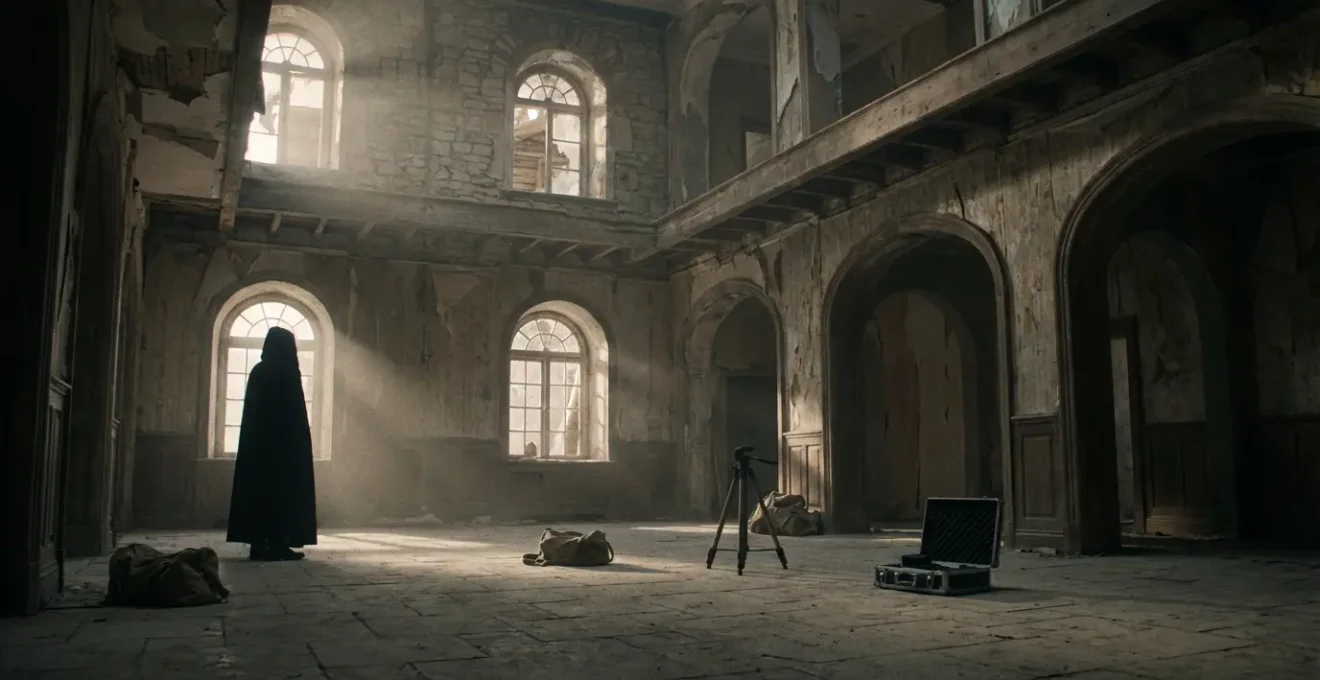
The flickering screens of late-night television have painted a dramatic picture of paranormal investigation. Teams armed with blinking gadgets dash through dark corridors, demanding that unseen forces show themselves. It’s an exciting, fear-fueled adventure, but it often has little to do with the disciplined practice of actual field research. The common advice is to buy expensive gear, visit a famously spooky cemetery, and start asking questions. But this approach often leads to more confusion than clarity, mistaking dust for spirits and radio interference for ghostly voices.
The truth is, genuine investigation is less of a “hunt” and more of a methodical exploration into the unknown. It’s a discipline rooted in patience, observation, and a healthy dose of skepticism. The most valuable tool isn’t a high-tech “spirit box,” but a critical mind capable of separating credible data from environmental noise. Before you can find something extraordinary, you must become an expert at identifying the ordinary. This requires understanding the fundamental theories behind different types of phenomena and developing a strict methodology for collecting and analyzing potential evidence.
But what if the key wasn’t about provoking a reaction, but about creating an environment where a connection can be made respectfully? This guide is built on that premise. We will move beyond the myths and delve into the foundational techniques of a true investigator. We’ll explore the theory of why some apparitions seem stuck on a loop while others interact, learn how to properly capture and analyze audio and visual data, and understand the critical difference between ethical engagement and dangerous provocation. This is your first step into a larger world, not as a ghost hunter, but as a critical and curious investigator of the unseen.
This article provides a structured approach for the aspiring investigator. We will cover the core theories, practical data collection techniques, and the essential mindset required for credible field work. The following sections are designed to build your knowledge methodically, from foundational concepts to advanced considerations.
Summary: A Skeptic’s Field Guide to Paranormal Phenomena
- Why Some Ghosts Repeat Actions While Others Interact?
- How to Capture Electronic Voice Phenomena (EVP) Clearly?
- Spirit Orb or Dust Mote: How to Distinguish in Photos?
- The Danger of Provoking Spirits to Get a Reaction
- When is the “Witching Hour” and Does It Really Matter?
- Why Visualizing White Light Actually Creates a Barrier?
- L-Rods or Pendulum: Which is Better for Field Work?
- Parapsychology: The Scientific Bridge Between Mind and Magic
Why Some Ghosts Repeat Actions While Others Interact?
One of the first puzzles a new investigator encounters is the varied nature of paranormal phenomena. You might hear a report of a ghostly figure walking down the same hallway every night at the same time, never deviating. In another case, a spirit might seem to answer questions directly through knocks or temperature drops. These aren’t just different ghosts; they represent two fundamentally different theoretical categories of haunting: residual and intelligent.
A residual haunting is like a recording imprinted on the environment. The “Stone Tape Theory” is a popular, though unproven, hypothesis for this. It suggests that highly emotional or traumatic events can be “recorded” onto stone or other materials and replayed under certain conditions. The apparition is not a conscious entity but an echo of the past, unaware of any observers. This is why it repeats the same actions in a loop. It’s important to approach this with skepticism; according to one analysis, there are 0 scientifically proven mechanisms for recording emotional energy in stone, making it a purely theoretical model.
An intelligent haunting, by contrast, involves a conscious entity that can perceive and interact with its environment. This is the spirit that might move an object on command, respond to questions, or manifest in a way that shows awareness of the investigators. Distinguishing between the two is the first critical step in any investigation. Misclassifying a residual echo as an intelligent spirit will lead you to waste hours trying to communicate with a recording. Your entire investigative strategy—from the questions you ask to the equipment you use—depends on correctly identifying what type of phenomenon you are potentially dealing with.
Therefore, your initial goal is not to “talk to ghosts” but to observe and document the phenomenon’s behavior. Does it repeat? Does it react? Answering these questions lays the groundwork for a credible and focused investigation.
How to Capture Electronic Voice Phenomena (EVP) Clearly?
Electronic Voice Phenomena, or EVPs, are voices or sounds captured on electronic recordings that were not audible to the human ear at the time. They are a cornerstone of modern paranormal investigation, but capturing a clear, credible EVP is far more difficult than simply hitting “record.” The primary challenge is not the phenomenon itself, but filtering it out from the sea of environmental and electronic noise. A faint radio transmission, a stomach gurgle, or the whisper of wind can all be easily mistaken for a paranormal voice.
To begin, you don’t need a thousand-dollar recorder. In fact, some investigators prefer simpler devices. As paranormal investigator Nick Groff notes, “Digital recorders are a really good basic tool. Cheap ones are great because they generate white noise, which spirits speak within.” This white noise, or static, can theoretically provide a sonic “raw material” for spirits to manipulate into speech. The key to clarity is creating a controlled audio environment. Always begin an EVP session by stating the date, time, and location, then conduct a 30-second period of complete silence. This establishes an audio baseline, allowing you to identify ambient sounds during review.
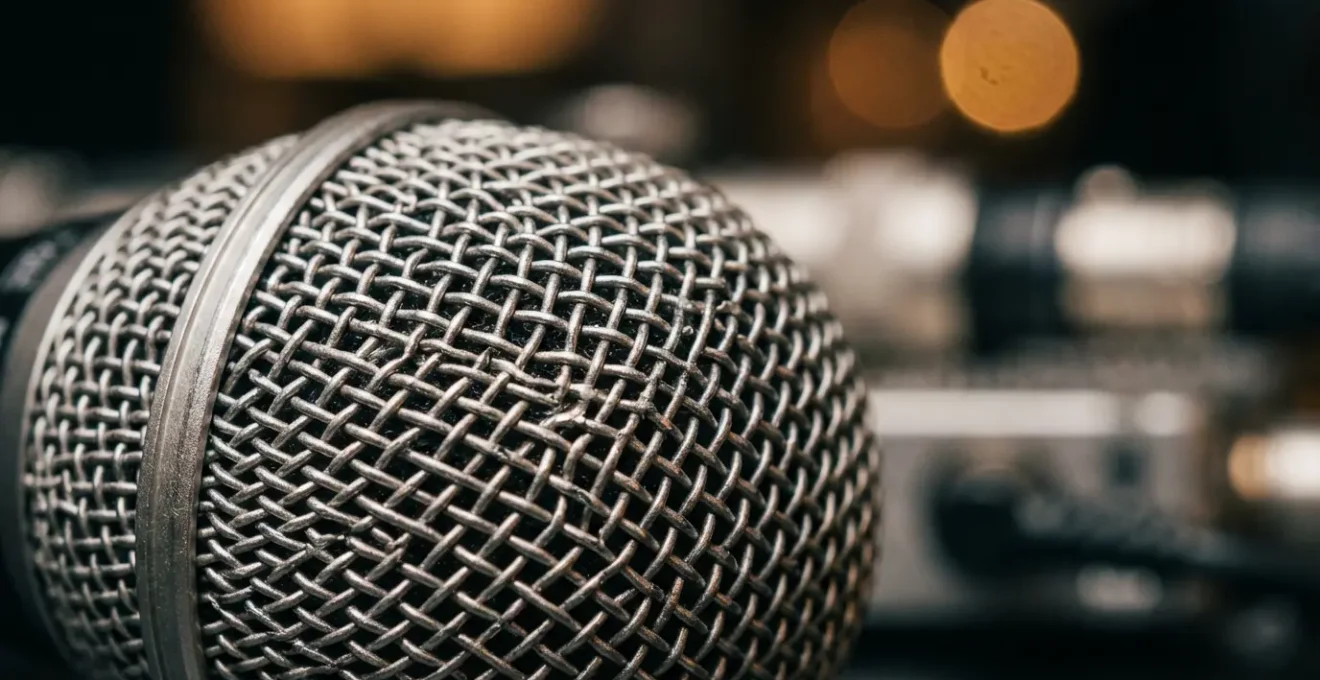
A more advanced technique involves correlating audio data with other environmental readings. Some theories suggest spirits require energy to manifest or communicate. Studies have explored this link, with some research indicating that phenomena are strongly associated with serial EMF and GMF spikes. By running an EMF meter alongside your audio recorder, you can later check if a captured voice corresponds with an anomalous energy spike. This cross-referencing of data transforms a simple recording into a more compelling piece of potential evidence, moving you from merely collecting sounds to analyzing patterns.
Finally, always wear headphones during playback. You will hear subtleties that are completely inaudible through a device’s tiny speakers. Listen to the recording multiple times at different speeds and even in reverse. The goal is to debunk every sound before you can even consider it paranormal.
Spirit Orb or Dust Mote: How to Distinguish in Photos?
Few pieces of “evidence” are as common—or as misunderstood—as orbs. These circular anomalies in photographs are frequently presented as proof of spirit energy, but in over 99% of cases, they are nothing more than mundane environmental contaminants. Dust motes, pollen, insects, or moisture droplets caught in the camera’s flash are the most common culprits. As a skeptical investigator, your job is to assume every orb is natural until proven otherwise. The burden of proof is high, and distinguishing a true anomaly requires a forensic approach.
An orb is simply the “circle of confusion” created when a tiny, out-of-focus particle is illuminated by a bright, close-range light source like a camera flash. Because the particle is so close to the lens, it’s rendered as a large, blurry, and often translucent circle. A genuine paranormal light anomaly, on the other hand, would theoretically be self-illuminated and have its own trajectory, independent of air currents. The following table breaks down the key differences.
This comparative table, based on criteria used by skeptical investigators and photo analysts, is your first line of defense against false positives.
| Characteristic | Dust/Moisture Orb | Potential Anomaly |
|---|---|---|
| Light Source | Reflects camera flash | Self-illuminated |
| Movement Pattern | Follows air currents | Independent trajectory |
| 3D Position | Always in foreground | Moves behind objects |
| Capture Method | Only in flash photography | Visible in video/no-flash |
| Environmental Context | Dusty/humid conditions | Clean environment |
Armed with this knowledge, you can perform field tests to systematically rule out natural causes. This isn’t just about taking pictures; it’s about conducting controlled experiments. The following checklist provides a simple but effective protocol for analyzing a potential orb on-site.
Action Plan: Orb Analysis Field Test
- Capture the scene: Take a photo of the area with the flash on.
- Control test: Immediately take a second photo of the exact same area with the flash turned off. If the “orb” disappears, it was flash reflection.
- Document conditions: Note the level of dust, humidity, and any airborne particulates (pollen, insects).
- Record video: Video is crucial. A dust mote will float along with air currents, while a true anomaly might exhibit intelligent, non-linear movement.
- Positional check: If an “orb” appears, try to determine if it moves in front of and behind objects in the room. A particle on the lens will always stay in the foreground.
By adhering to this strict methodology, you shift from being a passive picture-taker to an active analyst. Any orb that survives this level of scrutiny becomes a far more interesting piece of data, but very few ever will.
The Danger of Provoking Spirits to Get a Reaction
A common trope in paranormal television shows involves investigators taunting or challenging unseen entities. “If you’re here, make a noise!” “Show me a sign you’re not a coward!” This method, known as provoking, is born from impatience and a desire for dramatic results. However, it is not only ethically questionable but also methodologically flawed and potentially dangerous. It assumes the entity is hostile and willing to perform on cue, reducing a potential interaction to a cheap parlor trick.
The core problem with provocation is that it contaminates the investigation with negative energy and confirmation bias. As skeptic Benjamin Radford points out in the Skeptical Inquirer, a flawed logic often takes over: “…if one area of a home is colder than another, that may indicate a ghost; if an EMF meter detects a field, that too may be a ghost.” When you’re actively seeking a hostile response, you’re more likely to interpret any random creak or cold spot as a direct, aggressive reply. This is poor science and even poorer interpersonal skills. You wouldn’t walk into a stranger’s home and start making demands; the same respect should be extended to the deceased.
Furthermore, regardless of one’s belief system, intentionally inviting negativity into an environment is unwise. Whether you believe you are agitating a deceased human spirit or simply stirring up your own psychological fears, the result is an atmosphere charged with tension and anxiety, which can be detrimental to both the investigators and the location itself. A professional investigator seeks to understand, not to antagonize. The goal is peaceful and respectful communication. There are far more effective—and safer—ways to encourage interaction that are based on empathy and historical context.
- Use historical trigger objects relevant to the location’s past.
- Play period-appropriate music to evoke positive memories.
- Politely introduce yourself and explain your investigation’s purpose.
- Ask open-ended, respectful questions with patience.
- Document any potential responses without forcing further interaction.
By treating the potential entity as a person to be understood rather than a monster to be challenged, you not only conduct a more ethical investigation but also stand a much better chance of documenting a genuine, meaningful interaction.
When is the “Witching Hour” and Does It Really Matter?
Folklore and horror movies have drilled the concept of the “witching hour” into our collective consciousness. Typically defined as the time around 3:00 AM, it’s believed to be a period when the veil between our world and the spirit world is at its thinnest, leading to a peak in paranormal activity. Many new investigators prioritize this timeframe, believing it’s their best shot at capturing evidence. But from a skeptical and methodological standpoint, does this specific hour truly matter?
The short answer is: probably not. The 3:00 AM theory is largely rooted in religious symbolism, positioned as a mockery of the time Jesus was believed to have died (3:00 PM). There is no scientific data to support the idea that paranormal phenomena are more active at this specific time. In reality, a location is active or it isn’t, regardless of what the clock says. The reason more activity is often anecdotally reported at night is due to simple environmental factors. At night, there is less ambient noise, fewer visual distractions, and lower levels of electromagnetic interference from daily life. Our senses become heightened in the quiet darkness, making us more likely to notice subtle sounds or movements that would be lost during the day.
Instead of focusing on a superstitious timeframe, a disciplined investigator should focus on establishing a baseline and looking for deviations at any time of day. As noted paranormal investigator Joe Nickell argues, the focus should be on sound methodology, not unproven theories about when ghosts are active. He questions the reliance on certain tools without evidence, a logic that can be extended to the witching hour. The true work lies in data analysis, not waiting for a magic moment. Documenting a location’s normal environmental patterns over a 24-hour period is far more valuable than a one-hour session at 3 AM.
So, while a nighttime investigation can certainly be effective due to reduced contamination, don’t limit yourself. Some of the most compelling evidence has been captured in broad daylight. The best time to investigate is whenever you can do so in a controlled, methodical manner.
Key Takeaways
- The foundation of paranormal investigation is distinguishing between residual (repeating) and intelligent (interactive) phenomena.
- Data collection, whether audio (EVP) or visual (photos), must be subjected to rigorous analysis to rule out all mundane explanations.
- Ethical investigation, based on respect and empathy, is more effective and safer than aggressive provocation.
Why Visualizing White Light Actually Creates a Barrier?
Paranormal investigation can be a mentally and emotionally draining activity. You are entering spaces with complex histories, often filled with residual emotions of sadness, anger, or trauma. Whether you are a firm believer in spiritual attachment or simply recognize the psychological impact of such environments, mental and spiritual protection is a critical, non-negotiable part of an investigator’s toolkit. One of the most common and effective techniques for this is the visualization of white light.
The technique itself is simple. Before entering an investigation site, you find a quiet space to center yourself. You close your eyes, breathe deeply, and visualize a brilliant, pure white light originating from your core. You then imagine this light expanding outwards, enveloping your entire body like a protective shield or bubble. The “why” behind its effectiveness can be interpreted in two ways. From a spiritual perspective, this white light is seen as a high-frequency energy barrier that lower-frequency or negative entities cannot penetrate. It is a declaration of sovereign space.
From a psychological perspective, the act of visualization is a powerful form of setting intention and reinforcing mental boundaries. It functions as a meditative practice that calms the nervous system, focuses the mind, and creates a psychological buffer against fear and suggestion. When you feel protected, you are less likely to be startled by every creak and shadow, allowing you to remain an objective observer rather than a fearful participant. This mental centering is the first step in a pre-investigation ritual that prepares you for the work ahead.
- Practice mindfulness meditation for 5 minutes before the investigation.
- Visualize a protective white light surrounding your body.
- Ground yourself by focusing on the physical connection of your feet to the earth.
- Center your emotions through deep, controlled breathing exercises.
- Set clear, respectful intentions for your investigation.
Whether you view it as a spiritual shield or a psychological tool, the practice of visualizing white light creates a necessary boundary. It allows you to engage with the unknown from a position of strength and stability, which is essential for any serious investigator.
L-Rods or Pendulum: Which is Better for Field Work?
While EMF meters and digital recorders are standard investigative tools, some researchers also employ dowsing instruments like L-Rods and pendulums. These tools are not based on electronics but on the theory of the ideomotor effect—subtle, unconscious muscle movements that cause the tool to react, supposedly in response to an external stimulus or a question. They are highly subjective and not considered scientific evidence, but can be useful for some investigators as a way to map energy or attempt a simple form of communication. The choice between them depends entirely on the specific task you’re trying to accomplish.
L-Rods, which are two L-shaped rods held loosely in each hand, are primarily used for directional work. Their main function is to point towards a source of energy or to map out energy lines within a location. For example, an investigator might ask the rods to point to the area in the room with the strongest energy. The rods might cross to indicate a “yes” or a specific spot, or swing outwards for a “no.” They are excellent for covering larger areas and getting a general sense of a space.
A pendulum, on the other hand, is best suited for stationary, focused questioning. It excels at providing binary “yes/no/maybe” answers. Before using it, an investigator must “program” it by asking it to show its movement for “yes” (e.g., clockwise circle), “no” (e.g., back-and-forth line), and “I don’t know” (e.g., counter-clockwise circle). It is a much more subtle tool, best used when you have already identified a specific area of potential activity and want to ask a series of direct questions.
Neither tool is inherently “better” than the other; they simply have different applications. The following table highlights their primary strengths and weaknesses for paranormal field work.
| Tool Type | Best Use Case | Advantages | Limitations |
|---|---|---|---|
| L-Rods | Directional mapping, finding energy lines | Clear directional indication, covers more ground | Affected by wind, requires steady hands |
| Pendulum | Yes/no questions, static location work | Subtle movements detectable, portable | Limited to binary responses, subjective interpretation |
| Combined Use | Comprehensive investigation | Cross-validation of findings | Requires practice with both tools |
Ultimately, both tools are extensions of the user’s own intuition and subconscious. Their value lies not in providing definitive proof, but in guiding your attention and helping you formulate more targeted questions using your other, more objective equipment.
Parapsychology: The Scientific Bridge Between Mind and Magic
So, where does paranormal investigation fit in the grand scheme of things? Is it a hobby, a science, or something else entirely? The field exists in a fascinating gray area, bridging deeply personal experiences with the rigorous demands of scientific inquiry. The very reason for its existence is the widespread belief in the phenomena. For instance, polling data shows that 37% of Americans, 28% of Canadians, and 40% of Britons believe in haunted houses. With such a significant portion of the population experiencing or believing in these events, dismissing them outright seems premature.
This is where parapsychology enters the picture. It is the academic field dedicated to the scientific study of paranormal and psychic phenomena, including telepathy, precognition, and survival of consciousness after death. Early pioneers, like those in the Society for Psychical Research founded in the 19th century, were among the first to attempt to apply methodical, critical analysis to what was previously the domain of folklore and religion. They developed concepts like the aforementioned “Stone Tape theory” as an attempt to create a testable, naturalistic explanation for ghostly apparitions.
However, the field faces immense skepticism from the mainstream scientific community. Its subject matter is difficult to test in a repeatable, controlled laboratory setting, and the results of experiments are often inconsistent. The National Science Foundation, for example, has historically classified these topics as pseudoscientific. In a 2002 report, the NSF identified haunted houses and communication with the dead among pseudoscientific beliefs. This creates a challenging environment for researchers and field investigators alike.
As a modern paranormal investigator, you are walking in the footsteps of the early parapsychologists. Your role is to act as that bridge: to honor the anecdotal experiences of those who report activity while simultaneously applying the most rigorous and skeptical methodology possible. It is a commitment to exploring the mysteries of the mind and the universe, armed with a flashlight, a recorder, and an open yet critical mind. The goal may not be to provide the final answer, but to ask better, more informed questions.