
Contrary to the common belief that deja-vu is either a simple brain glitch or a passive echo of a past life, this investigation reframes it as something far more dynamic. Consider these moments as active data points from the ‘source code’ of your life’s timeline. They are interactive signals that reveal the profound interplay between your pre-written karmic scripts, glimpses of probable futures, and the critical choice-points that define your path.
That sudden, uncanny feeling washes over you. The conversation, the light filtering through the window, the faint scent in the air—it has all happened before. You’re experiencing deja-vu, a phenomenon that sits uncomfortably between a neurological hiccup and a profound spiritual message. Most explanations fall into two camps: science dismisses it as a memory-filing error in the temporal lobe, while popular spirituality often defaults to the simple answer of it being a past-life memory. This binary view, however, misses the intricate tapestry of possibilities that these temporal anomalies present.
What if these signals weren’t just passive echoes but active communications? What if they were checkpoints, designed to make you pause and take notice of the path you are on? This perspective shifts the experience from a disorienting glitch to a piece of usable data. The core of this mystery isn’t just about whether you’ve been here before, but *why* you are being reminded of it *right now*. This inquiry requires us to look beyond simple explanations and explore the mechanics of timelines, the pull of karmic patterns, and the emerging science that bridges the mind with the seemingly magical.
This guide moves beyond the surface-level debate. We will treat you as a fellow researcher into the mysteries of time, providing frameworks to track, categorize, and interpret your own deja-vu experiences. By exploring the connections between these temporal signals, your astrological blueprint, and the frontiers of parapsychology, you can begin to navigate these moments not with confusion, but with intention and insight.
To navigate this fascinating territory, we will explore the various dimensions of deja-vu, from its role as a spiritual signpost to its potential as a medical symptom. This structured journey will provide the tools to decode these strange and powerful moments in your life.
Summary: Unraveling the Enigma of Deja-Vu Signals
- Why Deja-Vu Might Be a Checkpoint on Your Life Path?
- How to Track Deja-Vu to Find Patterns in Your Life?
- Future Glimpse or Past Recall: What is Deja-Vu?
- The Risk of Ignoring Frequent Deja-Vu as a Medical Symptom
- How to Stay in the Deja-Vu Moment Longer to Gain Insight?
- Why the South Node feels like Home but keeps you Stuck?
- Nodal Return or Opposition: Which Crisis Are You Facing?
- Parapsychology: The Scientific Bridge Between Mind and Magic
Why Deja-Vu Might Be a Checkpoint on Your Life Path?
The most pervasive spiritual theory frames deja-vu as a signal of alignment, a cosmic nod assuring you that you’re exactly where you need to be. In this model, life is not a random series of events but a structured path with key decision points. A moment of deja-vu acts as a spiritual checkpoint, a flash of recognition from your higher self or soul plan confirming that you have successfully arrived at a pre-destined moment. It’s the feeling of your current reality momentarily syncing up with the blueprint of your potential, creating a powerful resonance of familiarity.
This idea is deeply intertwined with the concept of reincarnation and past lives. The sense of having “lived this before” may be quite literal. These experiences often serve as emotional triggers, unlocking cellular memories or karmic lessons that are relevant to your current situation. They are not just random memories, but strategically timed reminders designed to activate a piece of wisdom or awareness you need in the present moment. The intensity of the feeling can indicate the importance of the checkpoint you’ve reached.
Case Study: Dr. Ian Stevenson’s Research on Past Life Memories
The work of psychiatrist Dr. Ian Stevenson provides a compelling, research-based foundation for this idea. He spent decades documenting thousands of cases, primarily in children, who reported detailed memories of past lives. These weren’t vague feelings; they often included names, places, and events that could be factually verified. In many of these cases, deja-vu experiences were the catalysts that triggered these specific recollections, acting as an emotional and sensory bridge connecting the individual’s current consciousness to a past-life identity and its unresolved lessons.
Therefore, when a strong sense of deja-vu occurs, it’s an invitation to pause and assess. Are you in the middle of a major life decision? Are the people you’re with significant? The moment is not just a strange sensation; it is a live, energetic marker on your soul’s journey, confirming your progress or highlighting a critical juncture that requires your full attention.
How to Track Deja-Vu to Find Patterns in Your Life?
To move from being a passive experiencer to an active investigator of your own timeline, you must begin treating deja-vu as a source of data. The first step is to stop dismissing these moments as weird glitches and start documenting them. A dedicated “Cosmic Context” or deja-vu journal is an essential tool for this research. The goal isn’t just to note that it happened, but to capture the rich constellation of circumstances surrounding the event. Record the date, time, location, who you were with, and the specific conversation or activity that triggered the feeling. Most importantly, log the emotional quality of the experience—was it comforting, jarring, exciting, or foreboding?
Over time, this log will reveal patterns that are invisible when viewed in isolation. You might discover that your deja-vu episodes cluster around specific people, emotional states, or even certain astrological transits. This is not just about collecting strange anecdotes; it is about building a personal database to decode the language of your own intuition. To do this effectively, it’s helpful to understand that not all deja-vu is the same. Researchers and mystics have identified several distinct types of experiences.
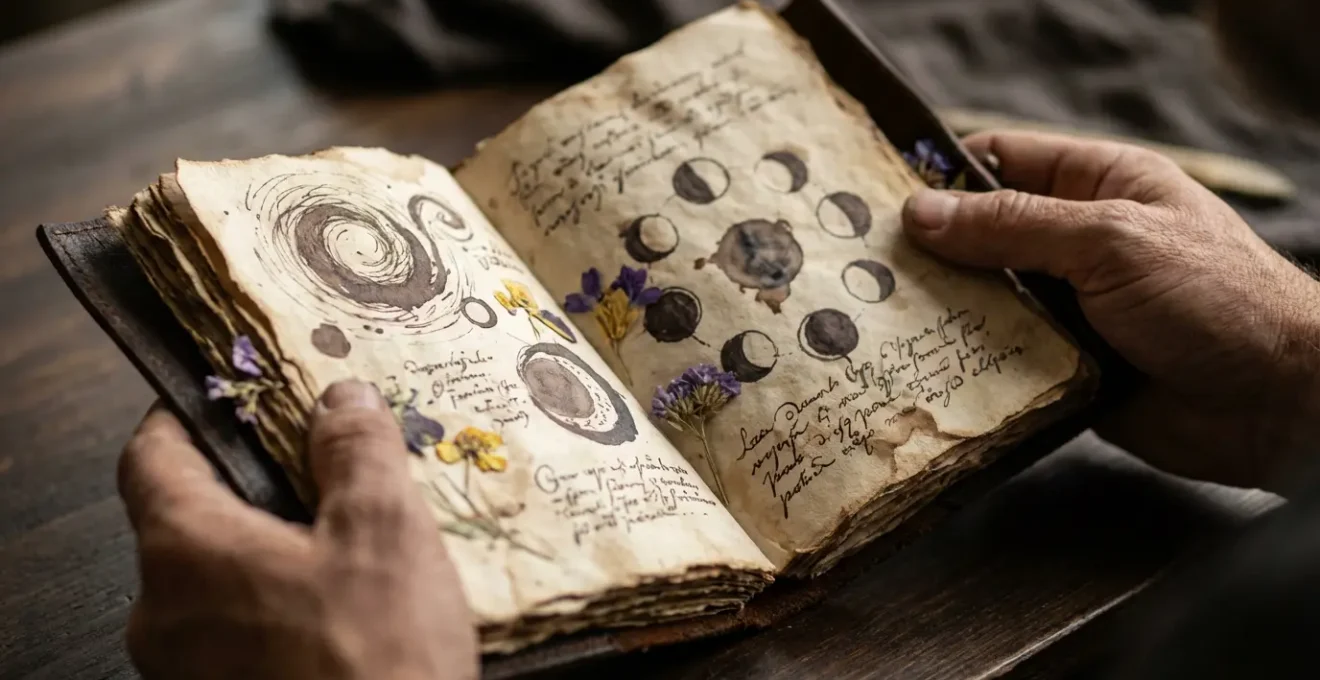
Recognizing the specific flavor of your experience allows for a more nuanced interpretation. By categorizing each event in your journal, you can begin to see if you are dealing with prophetic dream manifestations, karmic pattern recognition, or potential past-life bleed-throughs. This level of detail transforms a confusing feeling into a structured set of clues.
The following table, inspired by various spiritual interpretations, breaks down the different types of deja-vu. Use it as a framework for your journaling to better categorize and understand the signals you are receiving.
| Type of Deja-Vu | Description | Spiritual Interpretation | Tracking Method |
|---|---|---|---|
| Classic Deja-Vu | Feeling of re-living exact moment | Soul memory activation from parallel timeline | Note environmental triggers |
| Deja-Rêvé | Feeling you dreamed this before | Prophetic dream manifesting | Cross-reference dream journal |
| Deja-Senti | Familiar emotional state | Karmic pattern recognition | Track emotional quality |
| Deja-Vecu | Lived through entire sequence | Past life memory bleed-through | Document full sensory details |
Future Glimpse or Past Recall: What is Deja-Vu?
The central question in the deja-vu mystery is one of temporal direction: are you remembering something from the past, or are you glimpsing a moment from the future? While it’s not a rare event—research indicates that between 60-70% of people have experienced deja-vu—its origin remains a subject of intense debate. The two leading metaphysical theories offer compelling, though divergent, explanations for this fascinating temporal slip.
The “Past Recall” model is the most widely understood. It posits that deja-vu is a spontaneous activation of a memory, but not from your current life. This could be a memory from a past life, an ancestral memory encoded in your DNA, or even a soul memory of the “plan” you made before incarnating. The feeling of familiarity arises because, on some level of your consciousness, you have indeed experienced this before. As hypnotist El Bliliuos notes from a spiritual perspective:
Déjà vu happens when we unconsciously find a person or place familiar due to a past life experience
– Hypnotist El Bliliuos, Spiritual perspective on deja-vu phenomenon
The alternative “Future Glimpse” theory is perhaps even more mind-bending. This perspective suggests that deja-vu is the memory of a precognitive event, such as a dream or a fleeting vision you had but didn’t consciously register. When the event finally occurs in your physical reality, your brain recognizes it, creating the eerie feeling that you’re “remembering” the present. An even more profound version of this theory, drawn from channeled materials like the Seth texts, proposes the existence of parallel realities. According to this view, your consciousness exists simultaneously across multiple timelines, exploring different “what if” scenarios. As explained in the Seth Speaks ‘Probable Systems of Reality’ theory, deja-vu is a momentary bleed-through, where your awareness briefly intersects with that of a ‘probable self’ who has already lived this moment, creating a powerful but fleeting sensation of familiarity.
Ultimately, these theories are not mutually exclusive. It’s possible that some deja-vu experiences are echoes of the past, while others are glimpses of probable futures. The key is to analyze the context and feeling of each event. A deja-vu that carries heavy, unresolved emotion might point to a karmic past, while one that feels electric with potential could be a signpost from a probable future you’re moving toward.
The Risk of Ignoring Frequent Deja-Vu as a Medical Symptom
While exploring the fascinating spiritual dimensions of deja-vu, it is critically important to remain grounded and responsible. For a small subset of individuals, frequent and intense deja-vu is not a spiritual signal but a neurological one, specifically related to Temporal Lobe Epilepsy (TLE). Ignoring this possibility can mean delaying diagnosis and treatment for a manageable medical condition. The temporal lobes are the brain’s hub for memory and emotion, so it’s logical that unusual activity here could produce sensations of false familiarity.
This doesn’t invalidate spiritual interpretations; rather, it adds a layer of necessary discernment. Some researchers even speculate that heightened sensitivity in the temporal lobe could act as a psychic “antenna,” making a person more receptive to both neurological misfires and genuine psi-phenomena. This concept of “psi-sensitivity” suggests the medical and the metaphysical may not be mutually exclusive. A person could have a sensitive brain structure that predisposes them to TLE *and* makes them more open to psychic input. The challenge is to differentiate between a harmless spiritual signal and a symptom that requires medical attention.
The key lies in the quality and context of the experience. Spiritual deja-vu is typically fleeting, insightful, and accompanied by a sense of wonder or synchronicity. Neurological deja-vu, however, is often more disorienting, may be accompanied by other symptoms like strange smells or intense fear, and can occur with a frequency that disrupts daily life. Learning to tell the difference is a vital skill for any serious investigator of consciousness.
Your Action Plan: Spiritual vs. Medical Deja-Vu Discernment Checklist
- Assess the symptoms: Seek medical consultation if episodes involve loss of awareness, olfactory hallucinations (smelling things that aren’t there), extreme fear or panic, or last longer than 30 seconds.
- Analyze the context: Note if the experience is more likely spiritual, often accompanied by synchronicities, deep emotional resonance, and enhanced clarity, with a brief duration (under 10 seconds).
- Track the frequency: Be aware that experiencing more than five episodes per week warrants a medical evaluation, regardless of other symptoms.
- Document the triggers: Observe if episodes correlate with specific triggers such as fatigue, high stress, or particular locations, which can be relevant for both medical and spiritual analysis.
- Consider the overlap: Understand that both can coexist. Temporal lobe sensitivity might enhance psychic reception, meaning the spiritual and medical aspects are not always mutually exclusive.
How to Stay in the Deja-Vu Moment Longer to Gain Insight?
The fleeting nature of deja-vu is what makes it so maddening. The insight feels profound but vanishes before you can grasp it. The natural human reaction is to panic or become flustered, which short-circuits the experience. However, with practice, you can learn to “ride the wave” of the temporal slip, extending the moment just long enough to extract a meaningful message. This requires a conscious technique to override the brain’s fight-or-flight response.
The core of this practice is to remain calm and grounded. When the feeling hits, the amygdala (the brain’s fear center) can activate, telling you something is wrong. Your goal is to bypass this alarm system by immediately anchoring your awareness in the physical present. This sends a signal to your nervous system that you are safe, allowing the more subtle, intuitive parts of your brain to remain online. Instead of being a passive victim of a weird sensation, you become an active participant, a diver exploring a momentary opening in the fabric of time.
This is not about forcing the moment to last but creating the ideal internal conditions for it to unfold. It involves a combination of physical anchoring, conscious awareness expansion, and targeted breathwork. Having a pre-prepared question ready is also a powerful tool. When the veil between timelines is thin, your intention has a more direct pathway. The goal is to move from “Wow, that was weird” to “What is the key message here for me?”
The “Anchor and Expand” technique is a simple but powerful protocol to practice. By mastering this, you can transform a fleeting glitch into a moment of genuine insight:
- Anchor Phase: The instant you feel deja-vu, do not analyze it. Immediately focus all your attention on a single, concrete physical sensation. The most effective anchor is the feeling of your feet flat on the floor or the sensation of your breath entering your nostrils. Hold your focus there for a second or two. This prevents the initial panic response.
- Expand Awareness: Once anchored, consciously broaden your attention to your peripheral senses. Without moving your head, notice details on the edge of your vision, faint background sounds, or subtle smells. This shift from narrow focus to wide awareness keeps you in the present moment while being open to more information.
- Breathwork Protocol: Intentionally slow your breathing using a 4-4-6-2 pattern: inhale for 4 counts, hold for 4, exhale slowly for 6, and pause for 2 before the next inhale. This specific pattern is known to calm amygdala activation and promote a state of relaxed alertness.
- In-Glitch Question: Have a simple, powerful question ready in your mind. Don’t ask ‘why’ this is happening. Ask an action-oriented question like, “What is the key message here?” or “Show me my next step.” Pose the question to your higher self or the universe.
- Integration: As the feeling fades, immediately write down the first three words that come to mind. Don’t censor or analyze them. These words often capture the energetic essence of the message before your rational mind has a chance to dissect and dismiss the experience.
Why the South Node feels like Home but keeps you Stuck?
To deepen our investigation, we must turn to one of the most powerful frameworks for understanding life patterns: karmic astrology. Here, the feeling of familiarity central to deja-vu finds a direct correlation in the South Node of the Moon. In your birth chart, the South Node represents your past—your accumulated talents, ingrained habits, and karmic baggage from previous lifetimes. It is your comfort zone, the energetic space that feels instinctively familiar and safe. As one astrological perspective puts it:
The South Node feels ‘familiar’ like an old, worn-out shoe. The North Node ‘resonates’ with excitement and a hint of fear.
– Astrological wisdom perspective, Karmic astrology teachings on nodal axis
This feeling of an “old, worn-out shoe” is a perfect description of a certain kind of deja-vu. When you encounter a person, place, or situation that strongly activates your South Node, you may experience a powerful “karmic echo.” It feels like home, but it’s a home you’re meant to evolve beyond. Staying in the South Node’s energy is easy, but it leads to stagnation because your soul’s growth lies in moving toward your North Node—the point of your destiny, purpose, and evolution in this lifetime.
Interestingly, parapsychologists have noted that higher incidents of deja-vu occur in people 15-25 years old. This age window perfectly brackets the first Nodal Return (around age 18-19), a time when your life path and purpose come into sharp focus. A deja-vu during this period can be a powerful signal, either confirming you’re on your North Node path or warning you that you’re falling back into comfortable but limiting South Node patterns. For example, a case study of a birth chart with Saturn in Pisces might reveal a past life that was overly rigid and rule-oriented (a South Node theme). In their current life, this person might experience jarring deja-vu when encountering similar restrictive situations, signaling a karmic need to embrace the Piscean qualities of creativity and flow (their North Node path).
A South Node-driven deja-vu often feels heavy, repetitive, or draining. It’s the universe’s way of saying, “You’ve been here, done this. It’s time for something new.” Recognizing this flavor of deja-vu is crucial; it’s a direct prompt to consciously choose the unfamiliar, challenging, but ultimately more rewarding path of your North Node.
Nodal Return or Opposition: Which Crisis Are You Facing?
The astrological framework of the Nodal Axis provides more than just a general theme; it offers a precise map of life’s most critical developmental cycles. The Moon’s Nodes move through the zodiac, returning to their original position in your birth chart approximately every 18.6 years. These moments, known as Nodal Returns, are major life chapters where themes of destiny and purpose are powerfully activated. Halfway between these returns, around ages 27-28 and 46-47, you experience a Nodal Opposition, a time of tension and course correction.
The frequency and meaning of your deja-vu experiences often shift dramatically during these key life phases. They are no longer just random glitches but become highly specific signals related to the “crisis” you are facing. “Crisis” here is used in its original sense: a turning point or a moment of decision. Are you being asked to step into your purpose (Return) or to pivot away from a path that is no longer serving you (Opposition)? Your deja-vu is the feedback mechanism.
During a Nodal Return, deja-vu often feels like a confirmation. It’s a series of green lights, synchronicities, and “I’m on the right track” moments that affirm you are aligning with your soul’s intended path. The familiarity is comforting and empowering. Conversely, during a Nodal Opposition, deja-vu can feel jarring or like a warning. These are the “wrong way” signals, creating an uncanny feeling that you’re repeating a mistake or heading down a dead-end street. This is a crucial time for course correction, and deja-vu acts as your internal compass telling you to turn around.
By tracking your age and the corresponding Nodal cycle, you can add another profound layer of context to your deja-vu journal. The table below outlines these key cycles and the likely message your deja-vu is trying to send during each one.
| Age/Cycle | Nodal Event | Deja-Vu Message | Life Theme |
|---|---|---|---|
| 18-19 years | First Nodal Return | Path confirmation signals | Stepping into purpose |
| 27-28 years | Nodal Opposition | Wrong way warnings | Course correction needed |
| 37-38 years | Second Return | Integration confirmations | Mastering life lessons |
| 46-47 years | Second Opposition | Timeline split signals | Choose authentic path |
| 55-56 years | Third Return | Wisdom activation | Teaching phase begins |
Key Takeaways
- Deja-vu is more than a glitch; view it as a data point signaling a checkpoint on your life path, often connected to past-life or karmic lessons.
- Tracking deja-vu in a journal, noting its type (classic, deja-rêvé, etc.) and emotional quality, helps reveal hidden patterns in your life.
- Frequent, disorienting deja-vu accompanied by fear or loss of awareness should be medically evaluated, though a sensitive brain may be prone to both medical and psychic phenomena.
Parapsychology: The Scientific Bridge Between Mind and Magic
For decades, the phenomena we’ve discussed—precognition, timeline slips, past-life recall—have been relegated to the realm of belief and superstition. However, the field of parapsychology is slowly but surely building a scientific bridge to these mysteries. Using rigorous experimental protocols, researchers are demonstrating that aspects of consciousness can and do operate outside the conventional boundaries of time and space. This emerging science provides a stunning validation for what mystics have known for centuries: the mind is not confined to the brain.
One of the most compelling areas of research is “presentiment,” the study of whether our bodies react to an event *before* it happens. In controlled laboratory settings, subjects are shown a random sequence of calm and highly emotional images while their physiological responses (like heart rate and skin conductance) are monitored. The stunning finding is that, on a statistically significant basis, people’s bodies begin to react to an emotional image several seconds *before* the computer has even randomly selected it to be shown. As Dean Radin’s groundbreaking research demonstrates, these presentiment studies have been replicated successfully over 48 times, with odds against chance of 125,000 to one. This provides powerful evidence for precognition and supports the “Future Glimpse” theory of deja-vu.
This research expands from the individual to the collective. The Global Consciousness Project (GCP) offers another fascinating piece of the puzzle. The project uses a worldwide network of random number generators (RNGs), which should produce statistically random noise. However, during major global events that capture the attention and emotion of millions—like 9/11 or major natural disasters—these machines show significant, non-random deviations. This suggests that mass human consciousness can create a coherent field that influences physical reality. This could provide a scientific framework for shared psychic phenomena, including collective deja-vu experiences like the “Mandela Effect,” where large groups of people share a false memory.
Parapsychology is not providing easy answers, but it is asking the right questions and proving that these phenomena are real and measurable. It validates the experiences of countless individuals and confirms that investigating your own consciousness is not a fool’s errand, but an exploration of the very frontiers of science.
By viewing deja-vu through these interconnected lenses—as a life path checkpoint, a trackable data point, a karmic echo, and a scientifically measurable phenomenon—you are equipped to transform a disorienting experience into your own personal guidance system. The mystery is not something to be solved and discarded, but a living dialogue to engage with. The next time time folds in on itself, you will be ready not with confusion, but with curiosity and a new set of tools to ask: “What is the message for me, right now?”