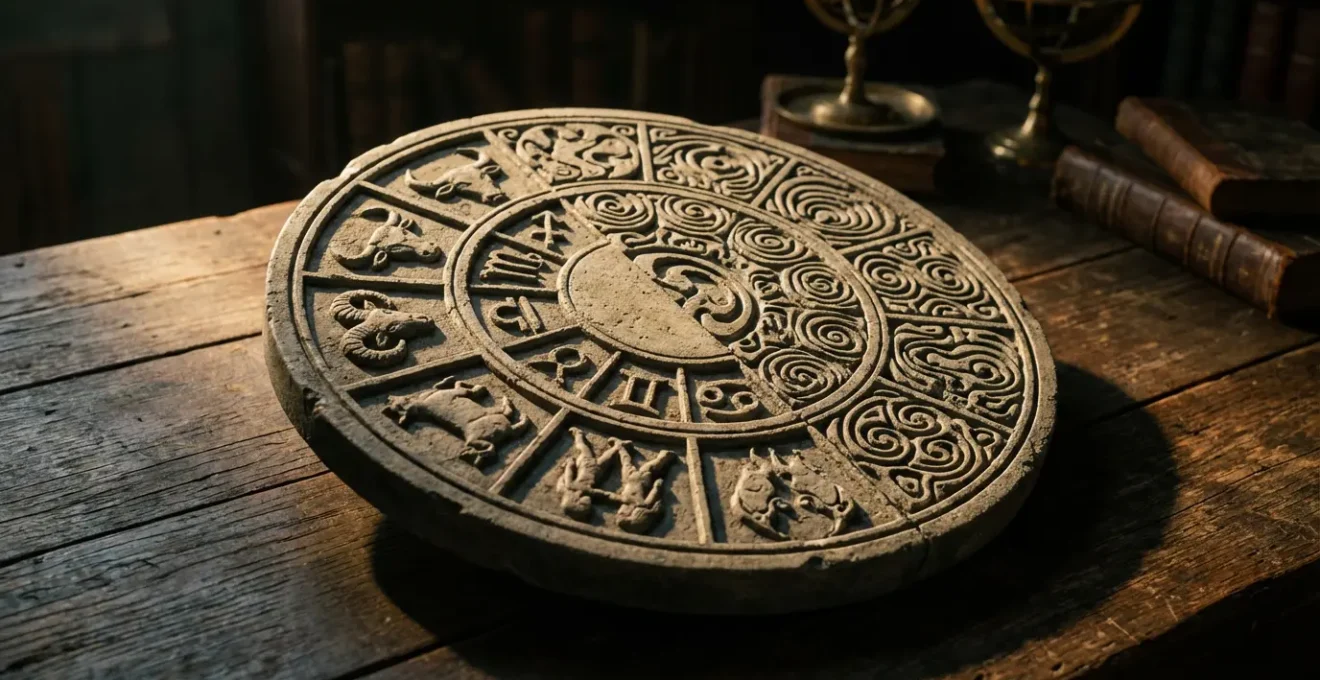
Zodiac stereotypes aren’t character flaws; they’re misunderstood energetic tools for personal growth.
- This article reveals the core archetypal function behind common astrological clichés, moving beyond simple labels.
- It provides a framework to look beyond the Sun sign and understand the whole person through their complete birth chart.
Recommendation: Begin by analyzing your own ‘negative’ traits not as weaknesses, but as untapped strengths waiting for conscious direction.
We’ve all been there. At a party, on a dating app, or during a casual chat, the dreaded question comes up: “What’s your sign?” A moment later, a verdict is delivered. “Oh, a Gemini… I can’t trust you.” Or, “A Scorpio? Too intense for me.” This pop-culture version of astrology has reduced the complex, ancient system into a set of cartoonish, often negative, stereotypes. We judge, dismiss, and categorize people based on a single piece of a vast cosmic puzzle, a phenomenon some now call “zodiac shaming.”
The common advice is to remember that “you’re more than just your Sun sign,” which is true but has become a platitude in itself. It doesn’t explain *why* these stereotypes exist in the first place or what truth they might be distorting. But what if these clichés aren’t simply wrong? What if they are just a gross misreading of a sign’s core archetypal function? The “two-faced” nature of Gemini, the “stubbornness” of Taurus, or the “intensity” of Scorpio aren’t character flaws; they are the raw, unrefined expressions of that sign’s evolutionary purpose within the zodiac wheel.
This article will deconstruct the most persistent stereotypes to reveal the astrological mechanics beneath them. We will move beyond the horoscope columns to understand why these traits exist, what their higher purpose is, and how to interpret them not as limiting labels, but as powerful tools for understanding ourselves and others. By exploring the underlying function of each sign’s energy, we can transform judgment into insight and see the zodiac not as a list of clichés, but as a map to wholeness.
To navigate this nuanced landscape, we will dissect some of the most misunderstood signs, compare similar traits, and provide concrete tools for looking beyond simplistic labels. This guide offers a more sophisticated way to engage with astrology, one that empowers rather than categorizes.
Contents: Debunking Zodiac Stereotypes
- Why Geminis Are Misunderstood as “Two-Faced”?
- How to Handle the Intensity of a Scorpio Without Fear?
- Taurus or Leo: Which Fixed Sign is Actually More Stubborn?
- The Mistake of Judging Someone Solely on Their Sun Sign
- When Do Cusp Signs Actually Apply in Real Astrology?
- How to Embrace Your Chart’s Shadow Side to Become Whole?
- The Risk of Dismissing a Partner Based on Elemental Lack
- Beyond the Horoscope: How Sun Signs Dictate Life Purpose?
Why Geminis Are Misunderstood as “Two-Faced”?
The stereotype of the “two-faced” Gemini is perhaps the most pervasive in all of pop astrology. It conjures images of gossip, unreliability, and duplicity. However, this is a fundamental misinterpretation of Gemini’s archetypal function. As the first air sign of the zodiac, ruled by Mercury the messenger, Gemini’s primary job is to gather and disseminate information. To do this effectively, it must remain neutral, curious, and capable of seeing a situation from every possible angle.
This inherent duality isn’t about being deceitful; it’s about intellectual versatility. As psychic expert and astrologer Inbaal Honigman notes, “A Gemini can see both sides of the argument and can be both for and against multiple important issues.” This ability to hold conflicting viewpoints simultaneously is a sign of high intelligence, not poor character. The negative “two-faced” label arises when this trait is undeveloped or used unconsciously. An immature Gemini might change their opinion to fit their audience, but a mature Gemini uses this skill to mediate, translate, and connect disparate ideas.
In essence, Gemini represents the mind’s endless curiosity. They are driven by a need to know, to question, and to communicate. Thinking of them as “two-faced” is like criticizing a journalist for reporting on both sides of a story. Their purpose is not to take a single, rigid stance, but to explore the spectrum of possibilities. This is why many astrology experts agree that Geminis are the most inquisitive sign of the zodiac, constantly seeking new data to build a more complete picture of the world.
So, the next time you encounter a Gemini’s quick-changing mind, try to see it not as fickleness, but as a powerful processor rapidly analyzing all available data. Their gift is adaptability and communication, not deception.
How to Handle the Intensity of a Scorpio Without Fear?
Scorpio. The very name conjures images of secrecy, manipulation, and a stinging intensity that many find intimidating. This fear-based stereotype causes people to tread lightly around Scorpios, expecting betrayal or emotional warfare. But this perspective completely misses the point of Scorpio’s powerful energy. This fixed water sign, co-ruled by Mars (action) and Pluto (transformation), is not here to be scary; it is here to be transformative.

As the image of deep, reflective water suggests, Scorpio’s domain is what lies beneath the surface. While other signs are content with the visible world, Scorpio is compelled to dive into the depths of the psyche, relationships, and life itself to uncover hidden truths. This is not for sport; it’s for healing. The intensity you feel from a Scorpio is the focused energy required to excavate buried emotions, confront uncomfortable realities, and facilitate profound change.
Case Study: Understanding Scorpio’s Transformative Nature
According to an analysis of zodiac stereotypes, as the sign associated with sex, death, and the underworld, Scorpio is here to delve beneath the surface of life, discover what is hidden, and bring to light what other signs are too afraid to acknowledge. The ultimate purpose of all that intensity is healing and transformation at the deepest level.
Handling a Scorpio’s intensity without fear means understanding its purpose. It’s not a personal attack; it’s their mode of operation for building trust and authentic connection. They test boundaries and ask probing questions because they crave genuine intimacy, not superficial pleasantries. To engage with them successfully, you must be willing to be real. Surface-level interactions will be met with suspicion. Honesty, vulnerability, and a willingness to go deep will earn their unwavering loyalty.
Instead of fearing their power, see it as an invitation. A Scorpio’s presence in your life is an opportunity to look at your own shadows and transform what no longer serves you. They are the zodiac’s soul surgeons, and while surgery can be intense, its goal is always healing.
Taurus or Leo: Which Fixed Sign is Actually More Stubborn?
Stubbornness is the hallmark of the fixed signs (Taurus, Leo, Scorpio, and Aquarius), whose role is to sustain and maintain energy. However, the cliché is most often pinned on Taurus. While it’s true that a Taurus can be unmovable, their brand of stubbornness is often misunderstood and unfairly compared to that of another famously resolute sign: Leo. The question isn’t just *who* is more stubborn, but *why* they are stubborn.
The nature of their stubbornness is rooted in their element and ruling planet. Taurus is a fixed earth sign ruled by Venus, the planet of values, comfort, and security. Their obstinacy is a form of passive resistance. It’s a deep, instinctual need to protect their stability and preserve what they have built. They don’t move because moving feels unsafe. An astrology personality analysis reveals that Tauruses possess nearly limitless perseverance and stamina, which manifests as sitting tight and outlasting any opposition. Their motto is “I will not be moved.”
Leo, a fixed fire sign ruled by the Sun, has a completely different motivation. Their stubbornness is a form of active assertion. It stems from their core need to protect their pride, identity, and authority. For a Leo, backing down can feel like a threat to their very sense of self. Their resistance is often dramatic and performative, a declaration that their way is the right way because it aligns with their personal integrity. Their motto is “My way is the best way.”
| Aspect | Taurus (Fixed Earth) | Leo (Fixed Fire) |
|---|---|---|
| Nature of Stubbornness | Passive resistance, ‘I will not be moved’ | Active assertion, ‘My way is the best way’ |
| Ruling Planet | Venus – values comfort and security | Sun – values pride and recognition |
| Core Motivation | Protecting physical and emotional security | Defending identity and authority |
| Conflict Style | Silent endurance, outlasting opposition | Performative resistance, dramatic stands |
So, who is more stubborn? It’s a tie, but in different arenas. Taurus is more resistant to changes in their physical environment and routine, while Leo is more resistant to challenges to their creative vision and authority. One is an immovable object, the other an unstoppable force defending its territory.
The Mistake of Judging Someone Solely on Their Sun Sign
The single greatest error in pop astrology is reducing a person’s entire identity to their Sun sign. As Tarot.com experts put it, “Each one of us is way more complex than just our Sun sign, but that doesn’t stop people from typecasting us!” The Sun sign represents your core identity, your ego, and your life’s purpose, but it is only one voice in a cosmic orchestra. Your personality is a complex blend of multiple planets, signs, and houses, each contributing a different facet to who you are.
To truly understand someone astrologically, you must look at their full birth chart (or natal chart). This is a snapshot of the sky at the exact moment of your birth. It includes your Moon sign, which governs your emotional nature and inner world; your Rising sign (or Ascendant), which represents the mask you wear and how others first perceive you; and the positions of all other planets (Mercury, Venus, Mars, etc.) in the twelve houses, which represent different areas of life.
For example, you could be a fiery, adventurous Aries Sun, but if your Moon is in nurturing, home-loving Cancer and your Ascendant is in practical, detail-oriented Virgo, your outward personality will be a complex and sometimes contradictory mix of these energies. You might have a core drive for independence (Aries Sun), but your emotional needs center on security (Cancer Moon), and you approach the world with a reserved, analytical demeanor (Virgo Ascendant). Judging this person as a “typical Aries” would be a complete miss.
Your Action Plan: Moving Beyond the Sun Sign
- Examine the Moon sign for emotional nature and inner needs.
- Study the Rising sign (Ascendant) for how others perceive you and your automatic responses.
- Analyze the house placements of all planets to see where their energy plays out in your life.
- Consider the Chart Ruler (the planet that rules your Ascendant) as a key theme in your life.
- Review the aspects (angles) between planets to understand your internal dynamics and personality quirks.
Ignoring the rest of the chart is like reading one chapter of a book and claiming to know the entire story. The Sun sign provides the theme, but the Moon, Ascendant, and other planets write the plot, create the characters, and add all the nuance.
When Do Cusp Signs Actually Apply in Real Astrology?
The idea of being “born on the cusp” is one of the most popular and persistent myths in astrology. The theory goes that if you were born within a few days of the Sun changing signs, you are a blend of both. While it’s a tempting concept that seems to explain why someone might not feel like a “typical” Aries or Taurus, it has no basis in technical astrology. It’s time to be blunt: the concept of cusp signs is, astrologically speaking, complete nonsense.
The Sun, like any planet, can only be in one place at a time. At the moment of your birth, it was either at 29°59′ of Aries or at 0°00′ of Taurus. There is no in-between. However, the *feeling* of being on a cusp is a real experience, and it has a real astrological explanation that is far more interesting than the myth. The answer lies in understanding critical degrees, particularly the anaretic degree (29°) and the 0° point of a new sign.

As one technical astrology source explains, planets at 29°, the anaretic or “fated” degree, express that sign’s energy with a frantic, urgent, and master-level intensity. It’s the sign’s last chance to make its point. A person with their Sun at 29° of Pisces, for example, will be an ultra-Piscean, embodying the sign’s mystical and compassionate qualities to an extreme. Conversely, a planet at 0° of a sign expresses the energy in its purest, most raw, and unrefined form. A Sun at 0° of Aries is the most primal, impulsive, and initiating form of Aries energy. This intensity at the very beginning and very end of a sign is what people mistake for being “on the cusp.”
So, you are not a “Piscies” or an “Arus.” You are either a Pisces or an Aries. But if you were born on the first or last day, you are likely experiencing that sign’s energy with a rare and potent intensity that makes you feel distinct from those born in the middle of the sign’s transit.
How to Embrace Your Chart’s Shadow Side to Become Whole?
Astrology is not about finding out what’s “good” or “bad” about your chart. It’s about understanding the complete energetic blueprint you were born with and learning to use all of it consciously. This includes the so-called “negative” traits or difficult placements—the shadow side. Embracing your shadow is not about indulging in destructive behavior; it’s about integrating the misunderstood or repressed parts of yourself to become a more whole and powerful individual.
Astrology is about understanding the energetic blueprint you were born with. It’s about understanding the cosmic influences that shape our lives and personalities, while still recognizing the power of free will.
– Anabel Tonkovic, Astrology isn’t What You Think it is: 5 Myths Debunked
Every sign has a shadow. The courage of Aries can become recklessness. The stability of Taurus can become stagnation. The communication of Gemini can become gossip. These aren’t separate traits; they are two sides of the same coin. The key to shadow integration is to recognize the unmet need or unexpressed potential behind the “negative” behavior. For example, a Virgo’s tendency toward nitpicking criticism is the shadow of their incredible gift for refinement and healing. The shadow emerges when the desire to improve things is misdirected or driven by anxiety.
Working with your chart’s shadow involves identifying these patterns and consciously choosing the higher expression of that energy. Here are some powerful astrological practices for shadow work:
- Identify your opposite sign: Your opposite sign on the zodiac wheel holds the qualities you may need to integrate. A Libra, focused on harmony, can learn healthy confrontation from their opposite, Aries.
- Explore your 12th House: This house governs the subconscious, hidden weaknesses, and self-undoing. Planets here point directly to shadow material that needs to be brought to light.
- Work with challenging aspects: Squares (90°) and oppositions (180°) in your chart highlight areas of internal conflict and tension. These aren’t curses; they are invitations to synthesize two competing energies into a new, integrated whole.
- Study your Saturn placement: Saturn shows where you feel limited and face karmic lessons. Embracing these challenges builds character and resilience.
By facing your chart’s challenging elements with curiosity instead of fear, you reclaim lost power. The goal of astrology isn’t to be a “perfect” Libra or Capricorn, but to be a fully integrated human who can wield both the light and shadow of their cosmic inheritance with wisdom.
The Risk of Dismissing a Partner Based on Elemental Lack
“He has no water signs in his chart, he must be emotionless.” “She lacks fire signs, she’s probably boring.” This kind of elemental checklist is a common but deeply flawed way of approaching astrological compatibility. A 2019 poll found that 44 percent of young Americans aged 18 to 29 either somewhat or strongly believe in horoscopes, and this belief can lead to swift dismissals in dating. While the balance of elements (Fire, Earth, Air, Water) is important, a “lack” of one element is not a character death sentence.
A person lacking water signs isn’t inherently emotionless. Instead, it may indicate that they process emotions differently, perhaps more intellectually (Air) or through physical action (Earth). They may need to consciously develop their emotional vocabulary and empathy, but it doesn’t mean the capacity isn’t there. Similarly, a person without fire signs isn’t doomed to a life without passion; they may just find their passion in intellectual pursuits (Air) or tangible creations (Earth) rather than through fiery self-expression.
More importantly, this simplistic view ignores the magic of synastry—the art of comparing two charts. One of the most beautiful functions of relationships is to help us activate and experience energies that are dormant in our own charts. As Bustle’s astrologers point out, partners can help activate empty houses. For example, if you lack fire signs but a partner’s Mars (planet of action) or Sun falls in your 5th house of creativity and romance, the relationship itself will bring that fiery, passionate, and inspiring energy directly into your life. Your partner literally helps you “fill in the blanks.”
Dismissing someone based on an elemental lack is like refusing to visit a country because your personal map of it is blank. You miss the opportunity to have that part of your world brought to life by someone who carries that energy naturally. A “missing” element in a chart is often an invitation for a relationship to provide the missing piece.
Key Takeaways
- Astrological stereotypes are not character flaws but misunderstood expressions of a sign’s core archetypal purpose.
- Judging a person by their Sun sign alone is a critical mistake; the entire birth chart (Moon, Rising, etc.) must be considered for a full picture.
- “Negative” traits are shadow aspects of a sign’s strengths, and integrating them is key to personal growth.
- Astrology is best used as a tool for self-awareness and understanding, not as a rigid system for labeling or dismissing others.
Beyond the Horoscope: How Sun Signs Dictate Life Purpose?
After deconstructing all these stereotypes, we’re left with a final, crucial question: what, then, is the point of the Sun sign? If it’s not a reliable descriptor of day-to-day personality, what is its true function? The answer is that your Sun sign represents your core life purpose, your heroic journey, and the central theme of your evolution in this lifetime. It’s less about *what* you are and more about *what you are learning to become*.
The zodiac is a story of development, and each sign represents a chapter. As Tarot.com illustrates with the first sign, “Aries is here to get the party started. They serve as the catalysts and instigators, inspiring others into action. Aries is supposed to be constantly starting new things and taking risks — that’s how they develop courage, find out who they are, and discover their inner warrior.” This is the Aries life purpose: to embody courage and initiation. Every other sign has a similar archetypal mission.

Your Sun sign is the light you are meant to shine in the world. Living in alignment with your Sun sign’s purpose is what leads to vitality, confidence, and a sense of meaning. When you express the highest qualities of your Sun, you feel energized and authentic. When you get stuck in its shadow (the stereotypes), you feel drained and inauthentic. The journey of life, from an astrological perspective, is the process of learning to embody the positive, evolved expression of your Sun sign’s energy.
So, look beyond the daily horoscopes and personality clichés. Ask yourself: what is my Sun sign’s heroic quest? Am I a Taurus learning to build lasting value? A Libra learning to create true justice and harmony? A Capricorn learning to build structures with integrity? This is where the real magic of astrology lies—not in a label, but in a lifelong, purposeful journey.